
Benefits of Regular Yoga: What to Expect and How to Begin

What if yoga could offer more than a stretch, without asking you to be flexible or spend hours on the mat? The benefits of regular yoga practice can include support for strength, mobility and wellbeing, but what you experience depends on the style, pace and consistency of your practice.
You might be curious about yoga but unsure which claims are supported, or worried that you need experience to keep up. You don’t. You can begin with simple movements, adapt poses to suit your body and build a routine around the time you have.
This guide explores the physical and mental benefits yoga may support, as well as the limits of what research can tell us. You’ll also find practical ways to start gently, practise consistently and make yoga part of a balanced fitness routine, whether you choose to practise at home or try a class in Forest Hill.
Table of Contents
What are the benefits of regular yoga practice?
Yoga isn’t one fixed routine or level. Some practices move steadily between poses, whilst others focus more on gentle movement, breathing or stillness. You don’t need to arrive flexible or experienced: a suitable class or home practice can be adapted to your starting point.
The benefits of regular yoga practice may reach beyond stretching. Depending on the approach, you might work on strength, balance and comfortable movement, while also making time to relax and focus your attention. These are possibilities, not guaranteed outcomes. Your experience depends on the practice you choose, your circumstances and what feels manageable for you.
What counts as regular yoga practice?
Regular yoga practice is a repeatable pattern of sessions that fits your life, not a perfect attendance record or a fixed number of classes. A shorter practice you can return to may be more sustainable than long sessions that are difficult to fit in.
You could follow a guided class for structure and shared practice, or practise at home at a time that suits you. Neither option is best for everyone. Your routine can change over time, with breaks when life gets busy and a gradual return when you’re ready.
Why can yoga support more than flexibility?
Yoga can bring together movement, controlled breathing, balance and attention. Holding a pose, for example, may ask you to steady your body and notice your breathing. Moving between poses can encourage you to pay attention to how each movement feels. The exact mix varies by style and class.
A physical practice is only one part of yoga’s wider context. The overview of Yoga as exercise describes how modern practice can combine poses, breathing and other elements. In a class, these elements may feature in different proportions, so one person’s experience may not match another’s.
Yoga can be part of a broader approach to wellbeing, but it isn’t a guaranteed cure or a replacement for medical advice or treatment. If you have a health concern or a movement causes discomfort, seek appropriate guidance and adapt your practice. Move at a pace that feels comfortable.
How regular yoga can support strength, mobility, and balance
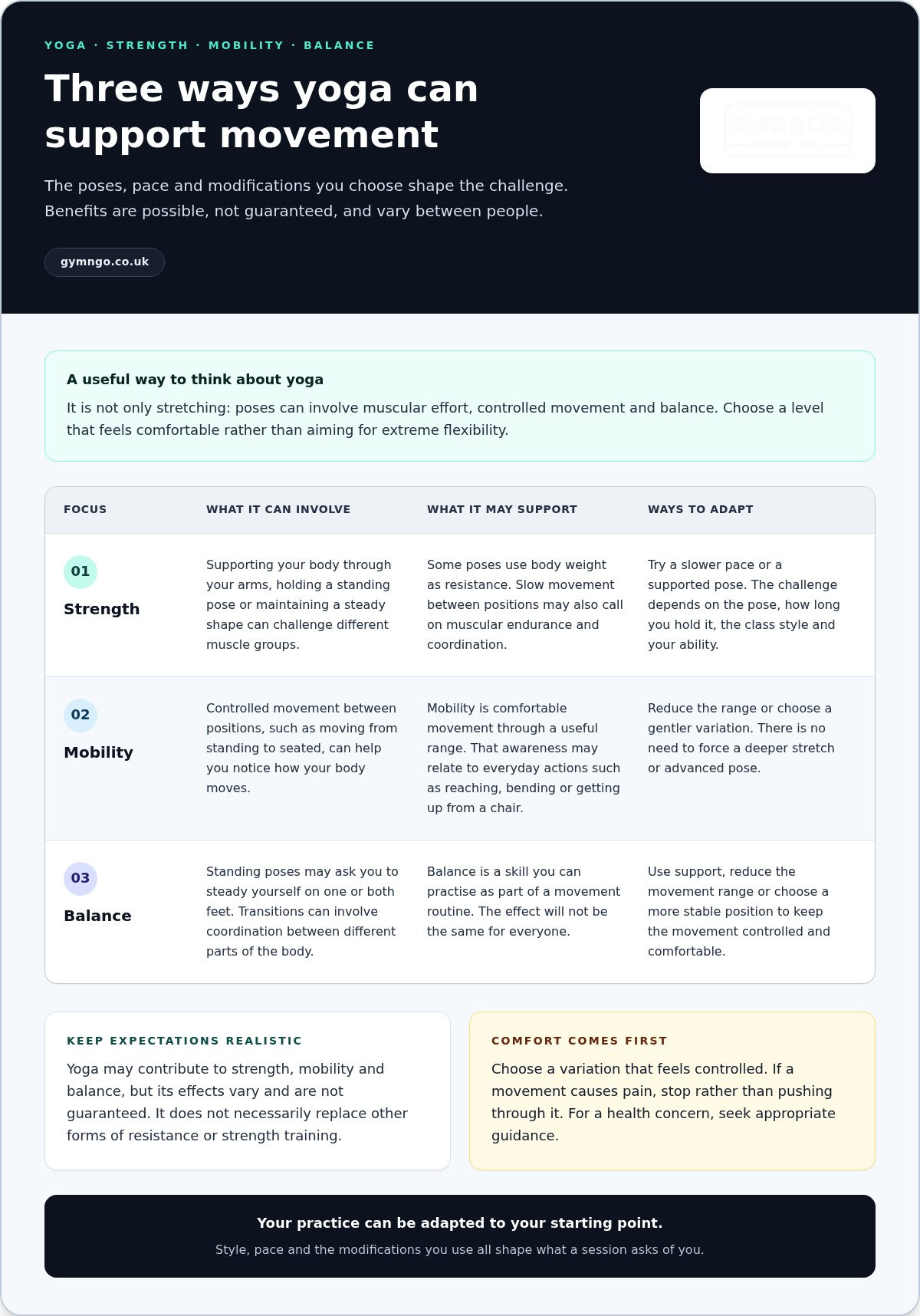
Yoga poses can ask your muscles to support your body, hold a position or move with control. A standing pose, for example, may challenge your legs and core, whilst moving slowly between positions can call on muscular endurance and coordination. The demands change with the poses, class pace and modifications you use.
Yoga may help develop strength, mobility and balance, but the effects vary between people and are not guaranteed. It can contribute to a varied movement routine, but it doesn’t necessarily replace other forms of resistance or strength training.
Can yoga build strength as well as flexibility?
Some poses use your body weight as resistance. Supporting yourself through your arms, holding a standing position or maintaining a steady shape can challenge different muscle groups. How demanding that feels depends on the pose, how long you hold it, the class style and your own ability.
You can adjust the challenge. A slower pace or supported pose may feel more suitable than a longer hold or deeper movement. Strength work outside yoga may still have a place in your routine, especially if you have specific fitness goals.
How might yoga help everyday movement and balance?
Mobility means being able to move comfortably through a useful range, not performing advanced poses or reaching an extreme stretch. Controlled movements, such as shifting between standing and seated positions, may help you notice how your body moves. That awareness can be relevant to everyday actions such as reaching, bending or getting up from a chair, though yoga won’t affect everyone in the same way.
Balance is also a skill you can practise. Standing poses may involve steadying yourself on one or both feet, while transitions can encourage coordination between different parts of the body. Make these movements easier by using support, reducing the range or choosing a more stable position. There’s no need to force a pose.
Choose a variation that feels controlled and comfortable. If a movement causes pain, stop rather than pushing through it. To explore movement at your own pace, try yoga and Pilates classes at Gym n Go Forest Hill.
What regular yoga may do for stress, focus, and wellbeing
A yoga session can give you space to notice your breathing and bring your attention back to what you’re doing. Moving with care, pausing between poses or following a breathing cue may feel calming for some people. The benefits of regular yoga practice can include this opportunity to slow down, but your response is personal and may differ from one session to the next.
Can yoga help you feel calmer or more focused?
During a session, you might focus on how a pose feels, follow the rhythm of your breath or listen for the instructor’s next cue. This deliberate attention can draw your mind away from other tasks for a while. You may leave feeling more settled or present, although that isn’t guaranteed. A lively or unfamiliar class might feel demanding rather than relaxing, particularly when you’re new to it.
Feeling calmer after a class is not the same as treating anxiety or another health condition. Research into yoga and mental wellbeing is an active area, but findings can vary with the type of practice, participants and study design. Broad claims shouldn’t be taken as proof that yoga works as treatment for everyone. If distress persists or significantly affects daily life, speak to a qualified health professional. Yoga can complement appropriate care, not replace it.
Does yoga affect sleep or day-to-day wellbeing?
Some people find that a gentler practice helps them unwind, which may feel supportive as part of a bedtime routine. Others notice no difference in their sleep, or find that a more energetic session close to bedtime leaves them feeling alert. Yoga isn’t a guaranteed fix for sleep difficulties.
Look for patterns rather than judging the effect by one class. Notice how you feel before and afterwards, whether a particular style feels comfortable, and whether your sleep or sense of wellbeing seems to shift alongside other changes in daily life. Enjoyment matters: a practice that feels welcoming and manageable may be easier to return to than one that leaves you tense or discouraged. The room, instructor, expectations and what’s happening in your life can all shape your experience.
Be patient and adjust your approach if a class doesn’t feel right. Try a different pace, focus on the parts you enjoy, or take a break when needed. If sleep problems continue or affect your everyday life, seek advice from a qualified health professional. Yoga may be one part of looking after yourself, but you don’t have to manage persistent difficulties on your own.
How to set realistic expectations and make yoga work for you
You don’t need to touch your toes, be highly fit or know the poses before you begin. Yoga includes different styles and levels of challenge, and movements can often be adjusted. Progress might mean feeling more at ease with a pose, finding it easier to focus, or simply making time for a session. There’s no standard timeline, and your experience may not match someone else’s.
Think of yoga as one part of a balanced routine, not a test you have to pass. It can sit alongside walking, strength work or other activities you enjoy. The benefits of regular yoga practice are more likely to fit your life when the routine feels manageable, rather than when you try to copy somebody else’s schedule.
How often should you practise yoga to notice a difference?
There’s no single weekly target that suits everyone. Start with sessions that feel realistic alongside your energy, commitments and other movement. A short home practice or a guided class can be a place to begin; adjust as you learn what works. Consistency means returning to a pattern you can sustain, not never missing a session.
How can beginners adapt yoga to their needs?
Choose a class that feels accessible and let the instructor know about relevant limitations or movements you need to adapt. Simpler variations, pauses and suitable props can make poses more comfortable. If a health concern makes exercise uncertain, seek qualified medical guidance before starting. Stop if a movement causes pain.
A gentle way to begin:
Choose your starting point. Decide whether a guided class or home practice feels more comfortable.
Make it manageable. Pick a session length and pace that fit your current routine and energy.
Adapt as you go. Use an easier variation, pause or leave out a movement that doesn’t feel right.
Notice your experience. After practising, consider what felt comfortable and whether you’d like to return to it.
Build around what you enjoy. Keep yoga alongside walking, strength training or other activities that matter to you.
Let your routine change with you. To explore a guided class in a welcoming setting, try yoga and Pilates classes at Gym n Go Forest Hill.
Try yoga in Forest Hill and build a routine that lasts
The benefits of regular yoga practice are easier to explore when you find an approach that feels comfortable and fits your life. Before choosing a class, think about what you want from it: gentle movement, practice with balance, or a structured way to make time for yourself. You don’t need to be flexible or experienced to take a first step.
Gym n Go Forest Hill offers yoga and Pilates classes in a welcoming setting for different fitness levels. Explore the Yoga Forest Hill guide for local class context, then choose an option that feels like a good fit for your comfort and routine.
What should you look for in a first yoga class?
Read the class description for information about pace, level and what to expect. Consider whether you’d prefer a class that moves steadily between poses or one with more time for gentle movement and pauses. You can speak to the instructor about adaptations that may suit you, pause, use a simpler variation or take part at your own pace. If you’re exploring other ways to move with a group, see the guide to group fitness classes in Forest Hill.
How can yoga fit into a balanced fitness routine?
Yoga doesn’t have to be your only form of exercise. You might combine it with walking, an appropriate strength-building activity or other movement you enjoy. The right mix is personal, so consider what feels sustainable and supports your goals without crowding out the rest of your life. If tailored fitness guidance would help you shape a broader routine, explore personal training in Forest Hill.
Trying a class is a simple way to see how yoga feels for you. Explore the local yoga guide and Gym n Go Forest Hill’s yoga and Pilates classes. There’s no need to commit to a demanding routine: start with a class that feels welcoming, then decide what you’d like to do next.
Take your first step towards a yoga routine
The benefits of regular yoga practice may include support for strength, comfortable movement, balance and moments of calm, but what you notice will depend on your body, chosen style and circumstances. Yoga doesn’t have to mean advanced poses or a demanding schedule. A manageable routine you can return to is a more useful starting point than chasing someone else’s results.
You can make yoga one part of a balanced fitness routine, alongside walking, strength-building activity or other movement you enjoy. Keep your expectations realistic, adapt poses to suit you and seek professional advice if you have health concerns or ongoing difficulties. Small, comfortable steps can help you discover whether yoga belongs in your week.
If you’d like to try a class locally, Gym n Go Forest Hill offers yoga and Pilates at its welcoming fitness centre in Forest Hill, SE23. A free one-day guest pass gives you a low-pressure way to experience the gym. Explore yoga and Pilates at Gym n Go Forest Hill and take your next step at a pace that feels right for you.
Frequently Asked Questions
What are the main benefits of regular yoga practice?
The benefits of regular yoga practice may include improved strength, balance and comfortable movement, along with time to focus and unwind. The experience depends on the style you choose, how it suits your body and what else is happening in your life. Yoga can be part of a balanced fitness routine, but it isn’t a guaranteed treatment for health conditions or a replacement for appropriate medical care.
How often should you practise yoga to see benefits?
There’s no single practice schedule that suits everyone. Start with sessions you can fit around your energy and commitments, then adjust if you want to practise more or less. A repeatable routine is more useful than trying to match another person’s timetable. You can practise in guided classes, at home, or use a mix of both. Allow yourself to pause or change your routine when life gets busy.
Can yoga improve flexibility if you are a beginner?
Yoga may help you move more comfortably through a range of motion, even if you’re starting with limited flexibility. You don’t need to reach advanced poses or force a stretch to take part. Choose a movement that feels manageable, use a simpler variation or pause when needed. Progress is individual, and comfort matters more than how far you can stretch. Stop if a movement causes pain.
Can yoga help with stress and anxiety?
Breathing and focused movement may help some people feel calmer or more present during or after a session. That experience varies, and it doesn’t mean yoga treats anxiety or replaces professional support. If anxiety or distress persists or significantly affects your daily life, speak with a qualified health professional. Yoga may complement appropriate care, but it shouldn’t be your only source of support when you need help.
Is yoga enough exercise on its own?
Yoga may contribute to movement, balance and strength, but whether it meets your needs depends on the type of practice and your personal goals. You might combine it with walking, other enjoyable activity or suitable strength-building exercise. A varied routine can offer different kinds of movement, so yoga doesn’t have to be your only activity. If you’re unsure what’s appropriate for your health, seek qualified guidance.
Do you need to be fit or flexible before starting yoga?
No. Yoga includes different styles and levels of challenge, and many movements can be adapted to suit your starting point. Look for a class that feels accessible, and let the instructor know about any relevant limitations so you can explore suitable options. You can pause, use a simpler variation or skip a movement. If a health concern makes exercise uncertain, seek medical advice before you begin.
How long does it take to notice the benefits of yoga?
There’s no fixed timeline for noticing a difference. You might feel more settled after one session, whilst changes in movement or strength may depend on your practice and circumstances. One class won’t predict what a longer routine will feel like. Notice your own experience over time, including what you enjoy and can sustain. In Forest Hill SE23, Gym n Go offers yoga and Pilates classes in a welcoming fitness centre.
Comments