
Exercise for Anxiety Relief in SE23: A Gentle How-to Guide

What if your first step towards feeling steadier wasn’t a harder workout, but movement that feels manageable? If you’re unsure where to begin, worried exercise might feel uncomfortable, or self-conscious in a gym, you’re not alone. Finding exercise for anxiety relief SE23 is less about pushing through and more about choosing a pace and activity that suit you. Movement may support your wellbeing, but it isn’t a treatment or a guaranteed fix.
This guide compares approachable options, sets realistic expectations and shows how to build a routine around everyday life. You’ll also find ways to adjust the pace if a session feels like too much. Getting started doesn’t have to mean committing to an intense workout.
We’ll explore walking, yoga, Pilates and group exercise, then look at local ways to try them in Forest Hill. Gym n Go, at 1-9 Sunderland Road, offers these movement options alongside personal training. A free one-day guest pass gives you a chance to experience the setting. Start small and choose what feels right for you.
Table of Contents
How can exercise support anxiety relief in SE23?
Starting exercise can feel like a big ask when anxiety is already taking up energy and attention. You might be unsure what to try, or worry that a faster heartbeat will feel uncomfortable. There’s no need to begin with a demanding workout. Movement can be one part of a broader approach to wellbeing, chosen at a pace that feels manageable to you.
The idea behind exercise for anxiety relief SE23 isn’t that a particular activity will cure anxiety. Instead, you can explore whether regular, enjoyable movement fits alongside other things that support your wellbeing, such as rest, time with people you trust or professional help. People respond differently, and exercise won’t feel helpful for everyone on every day.
What does exercise for anxiety relief mean?
Here, exercise simply means movement you choose to do, from a short walk to a gentle class or a few strength exercises. It may give structure to your day or offer a change of scene. If being outdoors appeals, Green exercise describes physical activity in natural environments. A walk outside is a simple way to explore that idea without special equipment or a fitness goal.
That’s different from diagnosing or treating an anxiety disorder. Exercise can be a personal wellbeing support, but it isn’t a substitute for care from a GP or mental health professional. UK Chief Medical Officers recommend adults aim for 150 minutes of moderate activity each week, but guidance also recognises that some activity is better than none. Treat the target as general guidance, not a test you must pass before movement counts.
When might exercise feel like a useful first step?
A small, repeatable activity may feel easier to approach than a full training plan. You could try a brief walk, a few gentle stretches at home or a short visit to a gym. These are options, not requirements. Start with something that fits your day and feels possible to repeat, rather than an activity you’ve chosen because you think you ought to do it.
Your energy, confidence and comfort can change from one day to the next. On a lower-energy day, keeping the activity brief or choosing a slower pace is a valid adjustment. If movement brings up unfamiliar sensations, pause, slow down or stop if you need to. You don’t have to push through discomfort to make progress, and there’s no single response that proves whether exercise is right for you.
If anxiety is persistent, worsening or disrupting everyday life, seek appropriate professional support rather than relying on exercise alone. A GP can discuss next steps and support options. Movement can still be part of your routine if it suits you, but it doesn’t have to carry the whole load. Begin with curiosity, notice how an activity feels, and let your needs guide what comes next.
Which types of exercise suit anxiety relief in SE23?
There isn’t one activity that suits everyone. Some people prefer moving alone and setting their own pace; others find a class or a planned session easier to follow. Consider what feels comfortable, practical and enjoyable enough to try again. Research reviews, including this overview of exercise as an intervention for anxiety disorders, explore possible links between exercise and anxiety. They don’t mean a particular activity will have the same effect for every person.
Is gentle movement or a class a better place to start?
Solo movement gives you privacy and the freedom to pause, change route or finish when you choose. A class brings structure and other people, which some find encouraging; others would rather get comfortable on their own first. Gym n Go offers yoga and Pilates classes as movement options, not as mental-health treatments. For more on these formats, explore this Forest Hill yoga and Pilates guide.
Think about practical comfort as well. Would you rather be outdoors or in a studio? Do you prefer quiet repetition or an instructor-led session? If unfamiliar surroundings feel daunting, a short walk or trying a class with someone you know may feel more manageable. Choose what fits your preferences and access needs, not what looks most impressive.
Could group exercise or personal training feel more manageable?
A scheduled group class can make it easier to set aside time and know what to expect. The shared setting may feel motivating, but it’s also fine if you prefer less attention or a quieter start. Personal training offers individual fitness guidance and the chance to focus on your own goals. It isn’t anxiety support; it’s another way to approach exercise. Read the Forest Hill personal training guide to learn more.
For exercise for anxiety relief SE23, focus on a format you can adapt rather than searching for a universally best choice. Gym n Go offers a free one-day guest pass if you’d like to experience a local setting. You can explore Gym n Go in Forest Hill and try gym access or a class at your own pace.
Can exercise make anxiety feel worse? Addressing common concerns
Exercise doesn’t have to be intense to be worthwhile. A slower walk, gentle stretching or a few minutes of movement can be a valid starting point. There’s no need to keep going just to meet someone else’s idea of a proper workout. Choose a pace you can approach without feeling pressured, and pause or try a different activity if that suits you better.
Movement can support general wellbeing, but it isn’t a substitute for professional mental-health care. It also won’t feel the same for everyone. If you’re exploring exercise for anxiety relief SE23, think of it as an option to adapt, not a promise that anxiety will ease.
What if exercise brings up uncomfortable sensations?
As you move, you may notice faster breathing, warmth or a raised heartbeat. Those sensations can feel unfamiliar or unsettling, particularly if you’re already feeling anxious. This description can’t explain what’s causing a sensation or determine whether it’s safe for you to continue. You’re allowed to slow down, rest or stop if you feel uncomfortable.
If you feel ready to try again, choose an easier pace or a lower-effort movement. You could also make a simple plan before you begin: pick an activity, decide where you can pause, and give yourself permission to finish early. If symptoms are concerning, persistent or unfamiliar, seek clinical advice rather than trying to push through or work out the cause yourself.
How can you make a gym or class feel less intimidating?
A gym or class can feel unfamiliar at first, and it’s perfectly normal to be new. Everyone starts somewhere, but a gym setting won’t suit every person. If you want to try one, reduce the unknowns with a simple plan: choose one activity, decide what you’d like to do, and allow yourself to leave or take a break if you need to.
Keep the first visit simple. You might look around or try one familiar piece of equipment rather than planning a full workout.
Choose a comfortable time. Pick a time that feels manageable for you, without assuming you need to visit when the gym is quiet.
Make the setting feel more familiar. If it helps, bring someone you trust or start with an activity you already know.
Give yourself options. A walk outdoors or gentle movement at home may feel better than a gym or group class.
Gym n Go is a Forest Hill fitness centre with gym access, yoga, Pilates and group classes. Its free one-day guest pass gives you a way to experience the setting without making the gym your only route to movement. Choose what feels comfortable and adjust as you go.
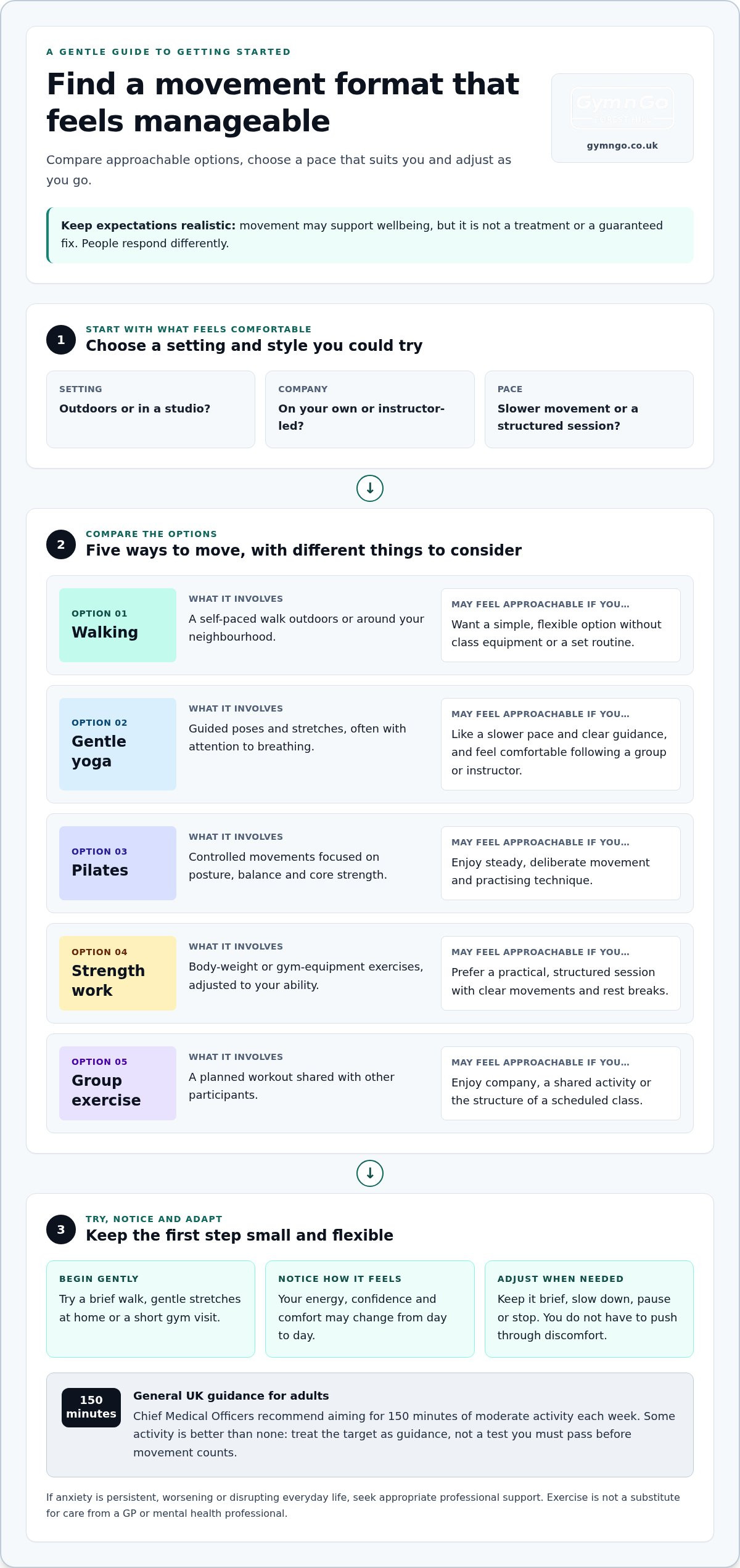
How to build a gentle exercise routine for anxiety relief
A routine doesn’t need to be ambitious to be useful. The aim is to find movement that fits your real week, not to build a perfect plan that becomes another source of pressure. Use these four steps as a flexible guide. You can repeat them, change the order or take a break whenever you need to.
Choose. Pick one familiar activity that feels achievable this week. That might be a walk, a few stretches at home or a gym session with a simple plan. Consider what you enjoy, what feels comfortable and what fits around your usual commitments. You’re choosing a starting point, not committing to one activity forever.
Begin gently. Keep your first session short and comfortable. For example, walk a familiar route or try a small number of movements, then stop while you still feel you could manage more. There’s no need to set a distance, weight or performance target. Starting smaller can make it easier to learn how the activity feels for you.
Notice. Afterwards, take a moment to reflect: Did the activity feel comfortable? Was any part enjoyable? What made it easier or harder to begin? You could jot down a few words, or simply think it through. The aim isn’t to judge yourself. It’s to spot what might help you make the next session more comfortable.
Adjust. Use what you noticed to shape your next attempt. You might choose a gentler pace, a different activity or a more convenient time. If the first choice didn’t suit you, that’s useful information, not failure. A good routine can change as your energy, schedule and preferences change.
How do you start without overcommitting?
Choose one activity you already know and can picture fitting into the current week. Make the first session brief enough to feel manageable, rather than setting a demanding goal. If rain, travel or low confidence makes an outdoor walk less appealing, have an indoor alternative ready, such as gentle stretching or a simple gym visit. That gives you options without adding pressure.
How can you keep the routine flexible?
Track how the movement felt, not only distance, weights or progress. A quick note such as “comfortable, but hard to fit in” can help you decide what to change. If a busy day or low energy interrupts your plan, move the session, shorten it or skip it and return when you’re ready. Consistency is built over time; a missed session doesn’t erase what you’ve done.
For exercise for anxiety relief SE23, let your routine serve your life, rather than making your life revolve around it. If you’d like a local setting to try gym access or a class at a pace that suits you, explore Gym n Go’s flexible fitness options.
Finding welcoming exercise options at Gym n Go in Forest Hill
Trying movement in a familiar local setting can make the first step feel more straightforward. Gym n Go is a fitness centre at 1-9 Sunderland Road in Forest Hill, with gym access, yoga and Pilates, group fitness classes and personal training. These are different ways to get active, not treatments for anxiety. Consider what kind of setting and guidance might suit you, then choose one option to explore at your own pace.
Which Gym n Go options might fit your preferences?
If you prefer a guided class, yoga or Pilates may be a place to begin. Both offer instruction and structured movement, which some people may find easier to follow than planning a session alone. They’re options for exercise, not mental-health care, and it’s fine to take things gently or decide a class isn’t for you.
Group fitness classes provide a shared, scheduled activity. Some people enjoy the company and routine; others prefer more space to choose their own pace. Gym access gives you another option if you’d rather focus on individual movement. Keep your visit simple by choosing a familiar activity instead of trying to plan a full workout.
Personal training offers individual fitness guidance. It may suit you if you’d like support shaping an exercise session around your fitness aims, rather than following a group format. It isn’t a clinical service, and no one activity is right for everyone. Think about whether you’d feel more at ease with shared instruction, individual guidance or the freedom to move independently.
What is a comfortable next step in SE23?
You don’t have to decide on a long-term routine before trying a new setting. Choose one activity that interests you, then use Gym n Go’s free one-day guest pass to experience the space. You might focus on getting comfortable with the surroundings or trying one type of movement. Keep your plan simple, and give yourself permission to pause or change direction.
Gym n Go also offers a free consultation where you can discuss your fitness goals. This can help you think through a practical starting point without making exercise feel more complicated than it is.
Exercise for anxiety relief SE23 can be one part of a wider approach to wellbeing, but it can’t replace appropriate support. If anxiety is affecting your everyday life, seek help from a GP or mental-health professional. Movement can sit alongside that care, at a pace and in a setting that feel right for you.
Take a gentle first step and Explore Gym n Go in Forest Hill.
Let your next step be small and yours
Building a routine isn’t about proving how much you can do. It’s about finding a form of movement you can return to without adding pressure to your day. For exercise for anxiety relief SE23, let your own comfort and preferences guide the pace. Some weeks may feel easier than others, and adapting your plan is part of making it sustainable.
Movement can be one supportive part of looking after your wellbeing, but it isn’t a cure for anxiety or a replacement for professional care. If anxiety is affecting daily life, speak with a GP or mental-health professional. You can still explore activity alongside that support, choosing a setting and approach that feel right for you.
If you’d like to take a gentle next step, Gym n Go’s free one-day guest pass offers a chance to experience the space, and a free consultation can help you discuss your fitness aims. Explore a welcoming way to get active at Gym n Go, and start in a way that feels manageable to you.
Frequently Asked Questions
Can exercise help with anxiety, or is it only useful for general fitness?
Exercise may support wellbeing as well as physical fitness. For some people, movement can offer a change of focus or a regular point of structure in the day, though the experience varies and it isn’t a guaranteed way to ease anxiety. If you’re considering exercise for anxiety relief SE23, treat it as one possible support alongside other care, not as a replacement for help from a health professional.
What is the best exercise for anxiety relief?
There isn’t one best activity for everyone. A useful choice is one that feels accessible and suits your preferences, whether that means walking outdoors, following a gentle routine at home or trying a class. Think about practical details too: travel, cost, equipment and whether you prefer company. If you dislike the first activity you try, it doesn’t mean all movement will feel the same.
Can exercise make anxiety symptoms feel worse?
It can feel uncomfortable for some people, particularly if faster breathing, warmth or a stronger heartbeat feels unsettling. You don’t need to push through: reduce your pace, take a break or stop. These sensations can have different causes, so don’t assume what they mean. If a symptom feels concerning, persists or is unfamiliar, seek advice from a health professional before continuing that activity.
How much exercise should I try if I feel anxious?
There’s no anxiety-specific amount you must reach before your activity counts. If you’re new to exercise, try a small amount that fits your day, such as walking to a nearby errand rather than taking transport, if that feels comfortable. You can build from there only if it suits you. The UK adult activity guidelines are general health guidance, not a personal prescription for managing anxiety.
Is yoga helpful for anxiety, and can beginners join a class?
Yoga may suit you if you enjoy guided movement and a steadier pace, but it isn’t an anxiety treatment and people’s responses differ. Beginners can look for a class described as suitable for their experience and ability. Let the instructor know you’re new, use simpler versions of movements where needed, and take a break if you feel uncomfortable. You don’t have to match anyone else’s pace.
When should I seek professional help for anxiety rather than relying on exercise?
Speak with a GP or mental-health professional if anxiety is persistent, becoming harder to manage or affecting everyday activities, sleep, work or relationships. Exercise can sit alongside appropriate care, but it shouldn’t be your only support if you’re struggling. You don’t need to wait until things feel severe to ask for help. If you feel at immediate risk or unsafe, seek urgent help through emergency services.

Comments