
Stress relief yoga Forest Hill: How yoga eases tension

Stress relief doesn’t have to mean pushing harder. If you’re looking for stress relief yoga in Forest Hill, gentle movement and steady breathing can offer a calmer focus and a chance to ease tension. The aim isn’t to perform perfect poses, but to find a pace that feels comfortable.
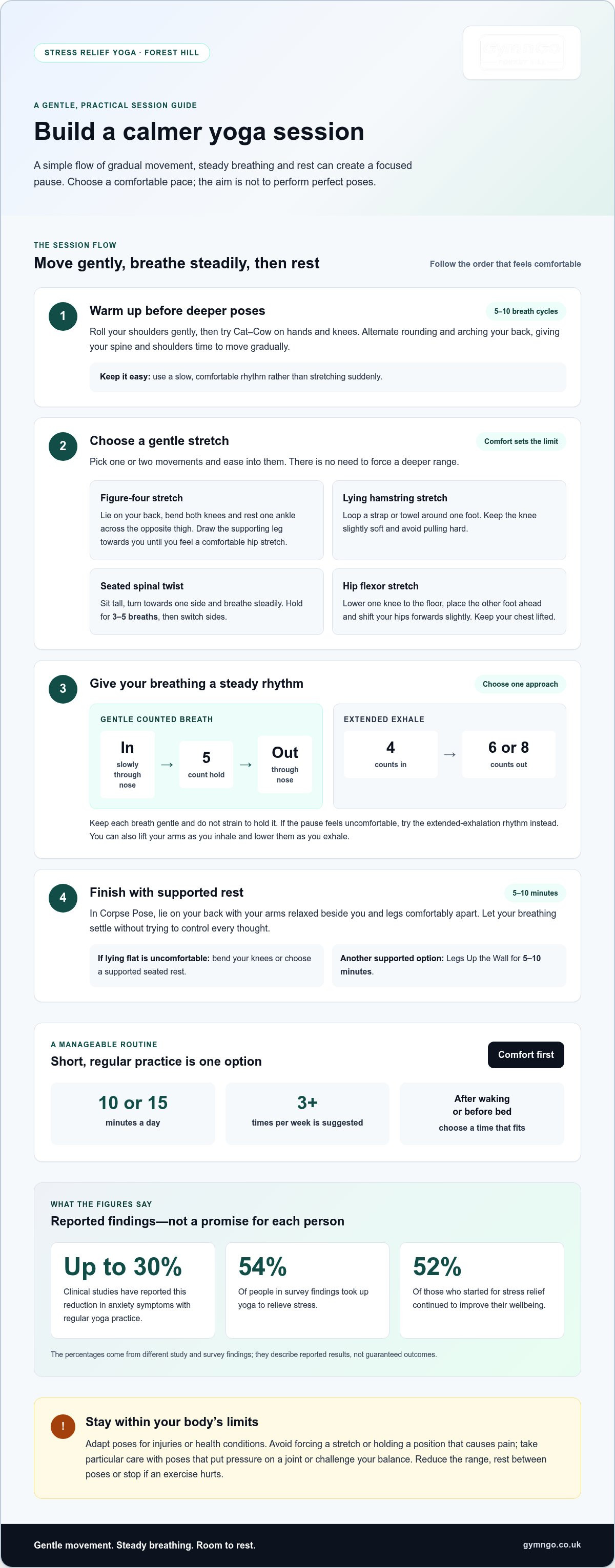
When stress or anxious feelings build up, a simple way to pause can help. Yoga gives you time to notice how your body feels and move with care. It isn’t a guaranteed fix, but a suitable practice may help you feel more settled.
This guide explains how yoga may support stress relief, what to expect and how different styles can feel. You’ll also find practical ways to choose a class and a comfortable starting point that fits your needs.
Table of Contents
How can yoga help you relieve stress?
Stress can leave your shoulders tight and your posture rigid. Yoga combines movement and breathing, helping you notice where your body holds tension. A slow sequence also gives your attention a clear focus, rather than letting it follow every worry. Depending on the practice, it may include stretches, stillness or meditation.
Begin with warm-up stretches before deeper poses. Roll your shoulders gently, then move through Cat-Cow by alternately rounding and arching your back on hands and knees. Repeat for 5-10 breath cycles. This gives your spine and shoulders time to move gradually, instead of asking a cold muscle to stretch suddenly.
To try a figure-four stretch, lie on your back, bend both knees and rest one ankle across the opposite thigh. Draw the supporting leg towards you until you feel a comfortable stretch around the hip. For a lying hamstring stretch, loop a strap or towel around one foot. Keep the knee slightly soft and avoid pulling hard.
A seated spinal twist adds gentle movement through your back. Sit tall, turn towards one side and breathe steadily; hold for 3 to 5 breaths, then switch sides. For a hip flexor stretch, lower one knee to the floor, place the other foot ahead and shift your hips forwards slightly. Keep your chest lifted and stop before the stretch becomes painful.
Other poses can offer a slower release. In Pigeon Prep, place one shin forward from hands and knees, then ease your hips back only as far as feels comfortable. Return to hands and knees after 5-10 breaths, then repeat on the other side. In a Wide-Legged Standing Forward Bend, soften your knees and fold from your hips; stay for 5 to 10 breaths. Legs Up the Wall can provide a supported resting pose for 5-10 minutes.
During mindful movement, work within your limitations and listen to what feels right for your body, as the NHS advises. Adapt poses to suit injuries or health conditions, and avoid forcing a stretch or holding a position that causes pain. Take particular care with poses that put pressure on a joint or challenge your balance.
Which Forest Hill yoga classes include meditation, breathwork or mindfulness? Look for class descriptions that name those elements, since a movement-focused class may not include them. Do local studios offer private yoga sessions for stress relief? Private sessions are a format for more individual attention, but availability depends on each studio’s programme.
What should beginners bring and expect at a stress relief yoga class? Wear clothes that let you move comfortably, bring water and arrive ready to follow the teacher’s pace. Are there online or at-home yoga options from Forest Hill studios? At home, you can practise simple poses such as Cat-Cow or Legs Up the Wall; studio-led online options depend on each studio’s programme.
Yoga and anxiety symptom reduction
Anxiety can make it harder to settle your attention or relax your body. A yoga practice offers a simple structure: movement, breathing and rest, repeated in one session. You can focus on one pose or breath at a time, rather than trying to change everything at once. Clinical studies have reported that regular yoga practice can reduce anxiety symptoms by up to 30%. That figure describes findings in studies, not a guaranteed result for each person.
Breathing exercises are one way to give your attention a steady point. Sit comfortably, inhale slowly through your nose, hold for a count of 5, then exhale through your nose. Keep the breath gentle; don’t strain to hold it. If that pause feels uncomfortable, try extended-exhalation breathing instead: inhale for 4 counts, then exhale for 6 or 8 counts. The longer outward breath gives you a clear rhythm to follow.
Pairing breath with movement can make a session easier to follow. For example, lift your arms as you inhale, then lower them as you exhale, repeating at a manageable pace. Or try a simple seated stretch with your feet grounded and shoulders relaxed. Keep the focus on noticing the movement and returning your attention to your breathing when your mind wanders.
Rest matters too. In Corpse Pose, lie on your back with your arms relaxed beside you and your legs comfortably apart. Stay for 5-10 minutes, allowing your breathing to settle without trying to control every thought. If lying flat feels uncomfortable, bend your knees or choose a supported seated rest. A quiet pause at the end of a practice can help separate the session from the demands waiting afterwards.
Consistency can make yoga easier to fit into everyday life. A short practice of 10 or 15 minutes a day is one manageable option, and the suggested frequency is three or more times per week. You might choose gentle stretches after waking or a slower sequence before bed. Use comfort as your guide: reduce the range of a movement, rest between poses, or stop if an exercise causes pain.
Yoga can support a calmer routine, but it isn’t a substitute for care when anxiety is affecting daily life. Notice what helps you feel focused, whether that’s a breathing exercise, a stretch or a restful pose. If a shared setting would help you build a steady habit, explore local yoga and movement classes as one way to practise with guidance.
Benefits of yoga for stress relief
Stress can show up as physical tension and a crowded mental to-do list. Yoga brings movement, attention and rest into one practice, creating a structured pause. For example, a slow transition between standing and seated poses can help you notice how your body feels. That awareness gives you a chance to choose a gentler position instead of moving on autopilot.
Interest in stress relief is reflected in survey findings: 54% of people took up yoga to relieve stress. Among people who started for that reason, 52% continued to improve their wellbeing. These figures describe survey responses, not a promise of a particular outcome. They do show why people may value a practice that brings space for wellbeing into an ordinary week.
Yoga offers a practical way to notice tension. In a standing forward fold, for instance, soften your knees and check whether your shoulders are creeping upwards. Relaxing them can change the position without forcing a deeper stretch. This body awareness may help you spot familiar signs of stress, such as a clenched jaw or raised shoulders.
A single focus can help settle your attention. In Tree Pose, you might look at a fixed point and notice the small adjustments you make to balance. If your thoughts wander, bring your attention back to that point. The aim isn’t to clear your mind completely, but to notice distraction and choose where to focus again.
Restorative yoga takes a gentler approach, using supported, restful positions to relax the body and still the mind. A supported reclining pose, for example, lets you settle without working to hold a challenging balance. Comfort matters more than how far you stretch, making restorative practice different from a faster sequence of continuous movement.
How you finish a pose can shape the experience, too. Slowly release a stretch, pause in a comfortable seated position and notice whether your breathing or shoulders feel different. An unhurried exhale can help you ease out of effort. This check-in helps you decide whether to repeat the movement, modify it or move on.
Assess your experience by noticing specific changes rather than expecting a dramatic transformation. After a class, consider whether your shoulders feel less tense, whether focusing felt easier or whether you made time to pause. These observations can help you work out which poses and pace suit you.
Yoga won’t remove the sources of stress in your life, but it can give you a repeatable way to respond to tension. A gentle sequence, balancing pose or restorative pause offers a different focus. Choose what feels useful that day, and let comfort guide how deeply you move.
Choosing a yoga style for stress relief
The right style depends on whether you want quiet, gentle movement or a more active sequence. In Forest Hill, look for beginner-friendly or restorative class descriptions if you prefer a slower introduction.
Yoga styles for stress relief
A yoga style describes the pace and approach to poses, breathing and rest. This matters because a fast sequence can feel very different from a quiet, supported practice.
Restorative yoga is a gentle form of practice intended to relax the body and still the mind. Supported positions let you focus on settling rather than holding your weight in a demanding pose. It may suit you if your main aim is to pause and unwind.
Yin yoga offers a slower pace, with poses usually held for around five minutes or longer for more experienced practitioners. Longer holds give you time to notice how a position feels. Choose a comfortable range rather than pushing towards a deeper stretch.
A more active class may include standing poses and repeated transitions. If you enjoy movement, that pace can hold your attention; if it feels too demanding, a gentler class may suit you better. The style name alone doesn’t tell you how a session will feel, so consider its pace, pose options and rest periods.
Use your experience during class as a guide. Notice whether you can breathe steadily, follow the teacher’s instructions and adjust a pose without strain. If sitting still feels easier than standing sequences, choose a class that emphasises rest or gentle movement.
Beginner-friendly and restorative studios
Beginner-friendly classes introduce poses and transitions at an accessible pace. This can be helpful if you want clear guidance before trying unfamiliar positions or moving between standing and sitting.
In Forest Hill, look for classes described as beginner-friendly or restorative. These labels can point towards a gentler starting point than a fast flow or advanced pose sequence.
Check the class description for practical details, such as whether the session focuses on relaxation, basic movement or longer holds. A restorative class prioritises supported rest; a beginner class may introduce a broader range of poses. Choose the emphasis that matches your comfort and what you want from practice.
Before settling on a style, compare how much time a class spends moving, holding poses and resting. If you’re new, a slower pace can leave more room to understand each position. Build confidence gradually, without treating flexibility or balance as entry requirements.
After a session, note one detail: whether the pace felt manageable, whether you could adapt poses or whether the quiet moments helped. This simple reflection can help you choose between a restorative class, a beginner introduction or a more active style next time.
What yoga classes in Forest Hill, London, help relieve stress?
For stress relief yoga in Forest Hill, look for a class with a pace and approach that help you feel comfortable. If relaxation is your priority, a gentle, restorative or beginner-friendly session may suit you better than a fast sequence.
Class names are a useful starting point, but not a full description. A restorative class focuses on supported rest and stillness, while a gentle class may include more flowing movement. A beginner session can introduce familiar poses at an accessible pace. If breathing, relaxation or mindfulness matter to you, look for those elements in the class details.
Consider what you want from your time on the mat. If you arrive feeling physically tense, gentle movement may help you focus on how your body feels. If you want a quieter experience, look for restorative language and a slower pace. Supported resting poses, for example, feel different from repeated standing sequences.
Read the class description for practical clues. Check the pace, experience level, whether breathing exercises are included and whether there’s time to rest. A title alone may not tell you whether a session includes meditation or breathwork. If the wording is broad, use the stated class focus to decide whether it sounds active, gentle or restful.
For a first visit, choose a class where you can adapt poses and take breaks. You don’t need to match another person’s flexibility or balance. Arrive 10 minutes before a group yoga class, as this gives you time to settle in and prepare. Wear clothes that allow comfortable movement, and bring water for after practice.
A welcoming class should make it clear that poses can be adjusted. Look for guidance on alternatives, clear explanations of transitions and time to settle between movements. These details can make a difference if you’re new, returning after a break or simply prefer a calmer pace.
Forest Hill classes can differ in style, teaching approach and focus, so compare descriptions rather than relying on a single label. If stress relief is your aim, prioritise a session that makes room for steady breathing and rest. A more energetic class may suit you if movement helps you unwind, but it needn’t be your first choice.
Group practice can provide structure and a shared routine, whilst a quieter class may offer more space for individual focus. Choose the setting that helps you feel at ease enough to follow the session. If guided practice sounds helpful, explore yoga class options and find a starting point that fits your preferred pace.
Timing can also help you build practice into a calming routine. The page suggests practising yoga poses in the morning to prepare for the day or before bed to help with sleep. Choose the option that feels easiest to maintain, and keep the practice gentle if winding down is your priority. A short, familiar sequence can make space for breathing and quiet attention without turning every session into a demanding workout.
Gym n Go Forest Hill: Flexible Gym Memberships
Gym n Go Forest Hill offers Yoga & Pilates Classes for guided movement as part of a stress-relief routine. Flexible Gym Memberships provide another way to build a broader exercise habit around classes.
Personal Training offers individual support with your fitness goals, while Group Fitness Classes provide a shared class setting. Choose the option that matches how you like to move and what will help you keep a regular routine. Sessions don’t need to be intense; yoga can sit alongside other forms of exercise.
If you’re ready to explore a local option, contact Gym n Go Forest Hill or visit gymngo.co.uk.
Make space for a steadier routine
Choose a practice you can return to, rather than waiting for the perfect moment to begin. Notice what helps you feel at ease, then build around that preference. A welcoming first session can turn stress relief yoga in Forest Hill from an idea into a routine that fits your life.
Gym n Go Forest Hill offers Yoga & Pilates Classes, Flexible Gym Memberships and Personal Training. These options can help you shape a routine around guided classes, independent exercise or individual support. Yoga may be a starting point or one part of a broader approach to movement and wellbeing.
Choose the pace that feels manageable and take your next step when you’re ready. Contact Gym n Go Forest Hill to explore your options. A calmer routine can begin with one small, considered choice.
Frequently Asked Questions
What Does a Yoga Practice for Anxiety Look Like?
A yoga practice for anxiety usually combines comfortable movement, steady breathing and a quiet finish. You might begin seated, notice your breathing, then move through gentle stretches before choosing a resting position. Keep the sequence adaptable: if standing poses feel distracting, stay seated or use a supported pose instead. In Forest Hill, look for a class whose description mentions a calm pace and options to modify movements.
Which type of yoga is best for stress and anxiety?
Restorative yoga is a gentle option if relaxation and stillness are your priorities. When choosing stress relief yoga in Forest Hill, consider whether you prefer supported rest, a beginner-friendly introduction or more continuous movement. Choose a pace that lets you follow the instructor without straining or feeling rushed. In your first class, notice whether you can adjust a pose and pause when needed.
Which Forest Hill yoga classes include meditation, breathwork, or mindfulness?
Look for class descriptions that name meditation, breathwork or mindfulness, as movement-focused classes may not include them.
Comments