
Tracking Fitness Progress at the Gym: A Practical Guide

A single weigh-in is a poor report card for your training. Body weight and performance can vary from one session to the next, so it’s easy to feel discouraged or wonder whether your effort is paying off. Tracking fitness progress at the gym doesn’t mean chasing every number or spending more time writing than exercising.
The useful signs of progress depend on your goal. You might be building strength, improving stamina, moving more comfortably or making gym visits part of your routine. Choose a few relevant measures and compare them over time. That makes it easier to spot change, even when one workout feels harder than the last.
This practical guide explains how to choose what to track, record it simply and use your notes to make sensible adjustments. You’ll learn to look for patterns rather than judge yourself on one result. A few clear notes after a session are enough to get started, whether you train at home or at a gym in Forest Hill, London SE23.
Table of Contents
Tracking fitness progress at the gym: what counts as progress?
Progress can be gradual, and it won’t look the same for everyone. You might attend more regularly, feel steadier during an exercise or recover your breath more comfortably. These changes can matter just as much as a visible difference. Tracking fitness progress at the gym works best when you define success by your own goal, rather than comparing yourself with someone else or expecting every session to feel stronger.
One workout is only a snapshot. You may lift less after a poor night’s sleep, or find a familiar exercise feels easier on a day when you have more energy. A single weigh-in can also vary, so it can’t tell you on its own whether your longer-term habits are changing. Look for repeated signs over time, not a verdict from one session.
A simple definition
Progress is a positive change that moves you towards a personal fitness goal. It isn’t simply doing more each time or weighing less. Sometimes progress means repeating an activity with greater ease. Sometimes it means building a routine you can maintain, such as making your planned gym visits more consistently.
Why track your gym progress at all?
A brief record helps bring small improvements into view. If you remember how an exercise felt a few weeks ago, you may spot that you now complete it with better control or less effort. Notes can also help you plan your next workout: you can recall what you did, decide whether to repeat it and choose a manageable next step. You don’t need specialist knowledge or a detailed spreadsheet. A few words after a session can be enough.
Keep the process useful and straightforward. Record details that help you understand your goal, such as the exercise, the work completed and how it felt. Skip anything distracting or unhelpful. A good log is one you can return to without turning exercise into a paperwork task.
Progress can mean more than a change in appearance
Fitness includes different abilities and qualities, as the overview of physical fitness explains. Your signs of progress should reflect what you want from training. If your aim is consistency, note whether you’re keeping to a routine. If you want to feel more confident, notice whether you’re more comfortable choosing exercises or using the gym. Strength and everyday fitness may show up in how an activity feels or what you can do with greater ease.
Body weight and appearance don’t have to be part of your record. They may not relate closely to your personal aim, and a change in either doesn’t tell the whole story of your effort or ability. Choose signs that feel relevant and encouraging. Everyone starts from a different place, so your earlier sessions are a more useful point of comparison than someone else’s results.
Start with one question: what would a useful change look like for you? Your answer gives your tracking a clear purpose and helps you recognise progress without needing to measure everything.
Choose gym progress measures that match your personal goal
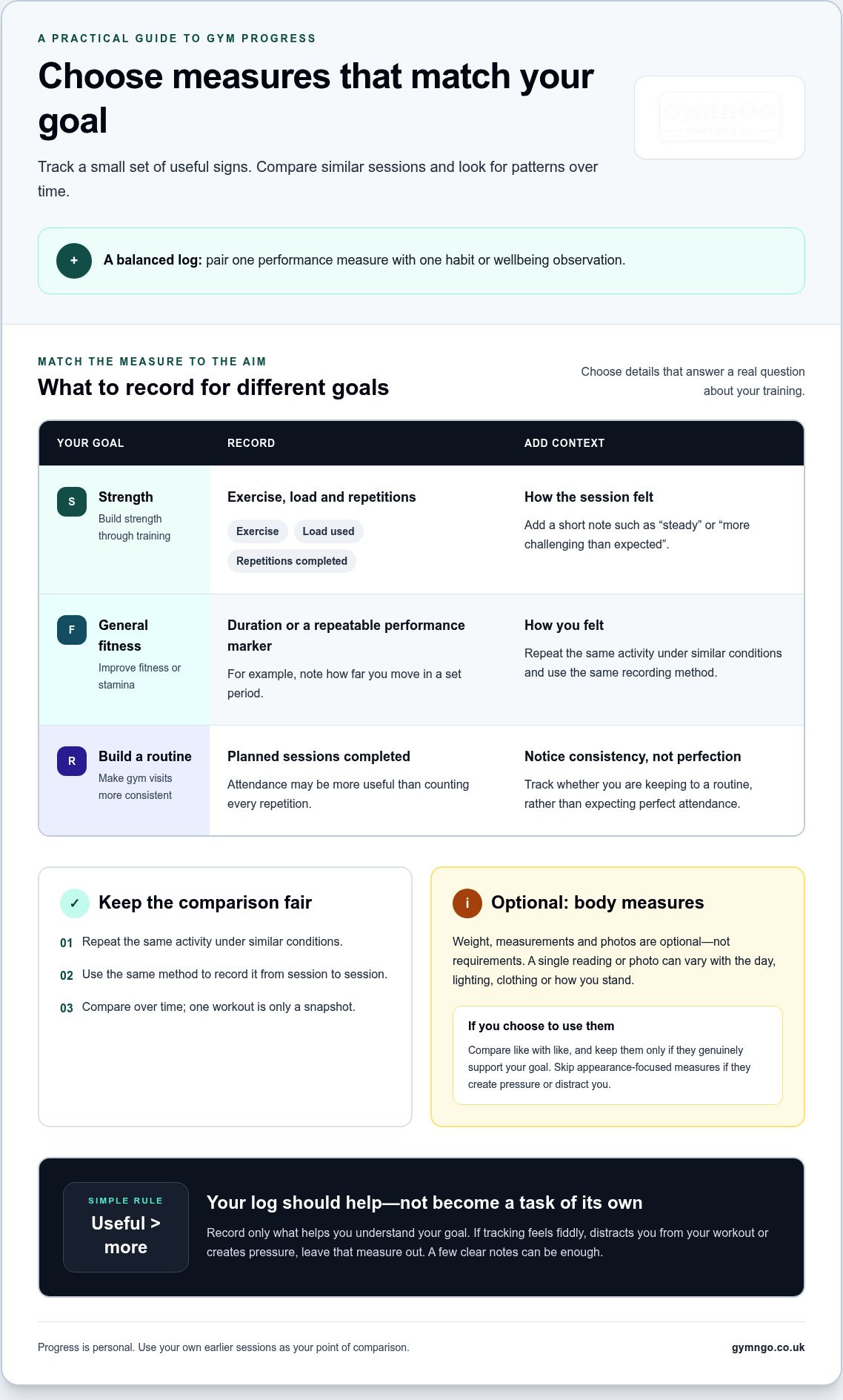
There’s no need to collect every available number. Start with the change you want to work towards, then choose a small set of measures that can show whether your routine is moving in that direction. A good measure links clearly to your goal and feels comfortable to record in the same way from one session to the next.
A useful approach is to pair one performance measure with one habit or wellbeing observation. For example, note the repetitions you complete and whether the movement felt controlled, or record how long you exercised and whether you made it to your planned session. This gives you context without filling your notebook or phone with data you won’t use.
Keep your measures manageable
Choose measures you can collect in a consistent way. If logging something feels fiddly, takes focus away from your workout or makes you feel pressured, leave it out. Tracking fitness progress at the gym should make your goal easier to understand, not harder to pursue.
What should you track for strength or fitness goals?
For strength, note the exercise, the load used, the repetitions completed and how the session felt. A short note such as “steady” or “more challenging than expected” adds useful context. For general fitness, record activity duration or a repeatable performance marker, such as how far you move in a set period. To make comparisons useful, repeat the same activity under similar conditions and use the same method to record it.
Strength: exercise, load, repetitions and effort or comfort.
General fitness: activity duration or a repeatable performance marker, plus how you felt.
Building a routine: planned sessions completed, rather than expecting perfect attendance.
Use only the details that answer a real question. If your aim is to build a routine, recording whether you attended may be more helpful than counting every repetition. If you’re working on strength, a simple note about the exercise and how it felt can help you decide what to repeat next time.
Should you track body weight, measurements or photos?
These are optional tools, not requirements. A single reading or photo can be affected by day-to-day variation, lighting, clothing or how you stand, so it may not reflect a longer-term change. If you choose to use them, compare like with like and consider whether the information genuinely supports your goal.
Skip appearance-focused measures if they create pressure or distract you from the reasons you wanted to exercise. You can make progress without weighing yourself, taking photos or measuring your body. Choose signs that help you feel informed and encouraged, and change your approach if a measure stops being useful.
If you’d value help choosing measures that fit your goal, personal training at Gym n Go Forest Hill offers tailored guidance. A trainer can help you connect your tracking to what you want to achieve and keep the process practical.
How to record gym workouts simply and consistently
A workout log is useful when it’s quick to update and easy to understand later. You don’t need to write a detailed account of every movement. Use this simple process to make tracking fitness progress at the gym a manageable part of your routine:
Choose one format. Pick a notebook, a note on your phone or a workout-tracking app. Start with whichever feels easiest to reach and use.
Record the key details. Note what you did and any information that will help you plan or compare a future session.
Review after several sessions. Look back for useful patterns before changing your plan. One entry is a record, not a conclusion.
Keep entries brief enough that they don’t take attention away from exercising. Add a note between exercises or write a few details when you finish. If recording each set interrupts your focus, jot down a reminder and complete the entry afterwards. The aim is a helpful record, not a perfect one.
What to write down during each gym session
For a basic workout log, the minimum useful details are the date, exercises, sets, repetitions and load where relevant. Add one short note about effort, energy or a change to your plan. For example, write “felt steady” or “used a lighter load today”. If you’re tracking cardio or general fitness, record the activity and duration, or the repeatable marker you’ve chosen.
These notes make future entries easier to interpret. If you changed an exercise or stopped earlier than planned, a brief explanation can help you remember why. You don’t need to document every detail of the session. Leave out information that doesn’t help you understand your training or decide what to do next.
Choose a tracking method you will actually use
A notebook is straightforward if you prefer writing by hand. A phone note is easy to edit and keeps entries together, whilst a workout app may organise exercises and sessions for you. Each format can work. What matters is whether you can use it comfortably and find your earlier records when you want to review them.
Notebook: simple and flexible, with space to add notes in your own words.
Phone note: convenient for short entries, especially if you already use notes to organise everyday tasks.
App: can provide a structured way to save workouts, but extra features aren’t essential for a basic log.
Try one format before adding more measures or switching between tools. For instance, create the same short entry each time: date, exercise, sets and repetitions, load if relevant, then a brief note. If you can fill it in without disrupting your session and understand it when you look back, it’s doing its job. If it feels like a chore, simplify it.
After several sessions, return to your entries and check whether they answer a practical question: what did you do, how did it feel, and what might you repeat or adjust next time? Keep the parts that help. A consistent, readable record is more useful than a complicated one you stop using.
How to review gym progress and respond to plateaus
Your training log becomes more useful when you step back and look for patterns. Treating every entry as a judgement can make ordinary ups and downs feel bigger than they are. Instead, compare similar sessions and ask whether your effort, performance or routine is changing over time. A slower workout or a stretch without an obvious improvement doesn’t mean your plan has failed.
Make fair comparisons. If you’re checking strength, compare the same exercise using similar technique and conditions. If you’re tracking consistency, look at whether you’re completing the sessions you planned, allowing for real-life changes. A different exercise, shorter session or unusually tiring day may explain a result. Note that context before deciding it signals a trend.
How often should you review your training log?
Choose a check-in point that suits how often you train and what you’re working towards. For some goals, it may help to wait until you have several comparable sessions to look at. There’s no single review schedule that suits everyone. Notice whether you’ve been consistent, how your performance feels and whether the routine is still manageable alongside everyday life.
During a review, try asking yourself:
Have I recorded enough similar sessions to make a fair comparison?
Is anything becoming easier, more familiar or more comfortable?
Does my routine still fit my time, energy and goal?
Tracking fitness progress at the gym is more helpful when your review is regular but not constant. If you check your notes after every session, you may react to normal variation before a pattern has had time to emerge. Give your records room to tell a fuller story.
What to do when progress feels slow
First, check the record itself. Have you been noting sessions consistently, and are you comparing like with like? If entries are missing or the exercise has changed, there may not be enough information to draw a clear conclusion. A short plateau can simply mean you haven’t yet seen a noticeable change. It doesn’t erase the work you’ve already put in.
If progress still feels slow, consider whether your goal and chosen measures remain relevant. A busy period may affect how often you can train, or your original measure may no longer reflect what matters most to you. Avoid changing several things at once. Choose one modest adjustment, such as making the routine more manageable or revisiting the exercise you’re tracking, then give it time before reviewing again.
If you’d like support interpreting your training notes and thinking through a next step, explore personal training guidance at Gym n Go Forest Hill. A personal trainer can offer tailored guidance to help you reflect on your approach and make a practical plan.
Make tracking fitness progress part of a welcoming gym routine
A useful tracking habit should fit around your training, not take it over. Keep the process simple: attend your session, make a brief record, review it when you have enough entries to compare, then choose one next step. That might mean repeating an exercise, adjusting your plan or continuing with the routine that’s working for you.
Attend: focus on the session and follow your plan.
Record: add a short note at the end, while the details are fresh.
Review: look for patterns when you have a few comparable sessions.
Choose one next step: keep it practical and manageable.
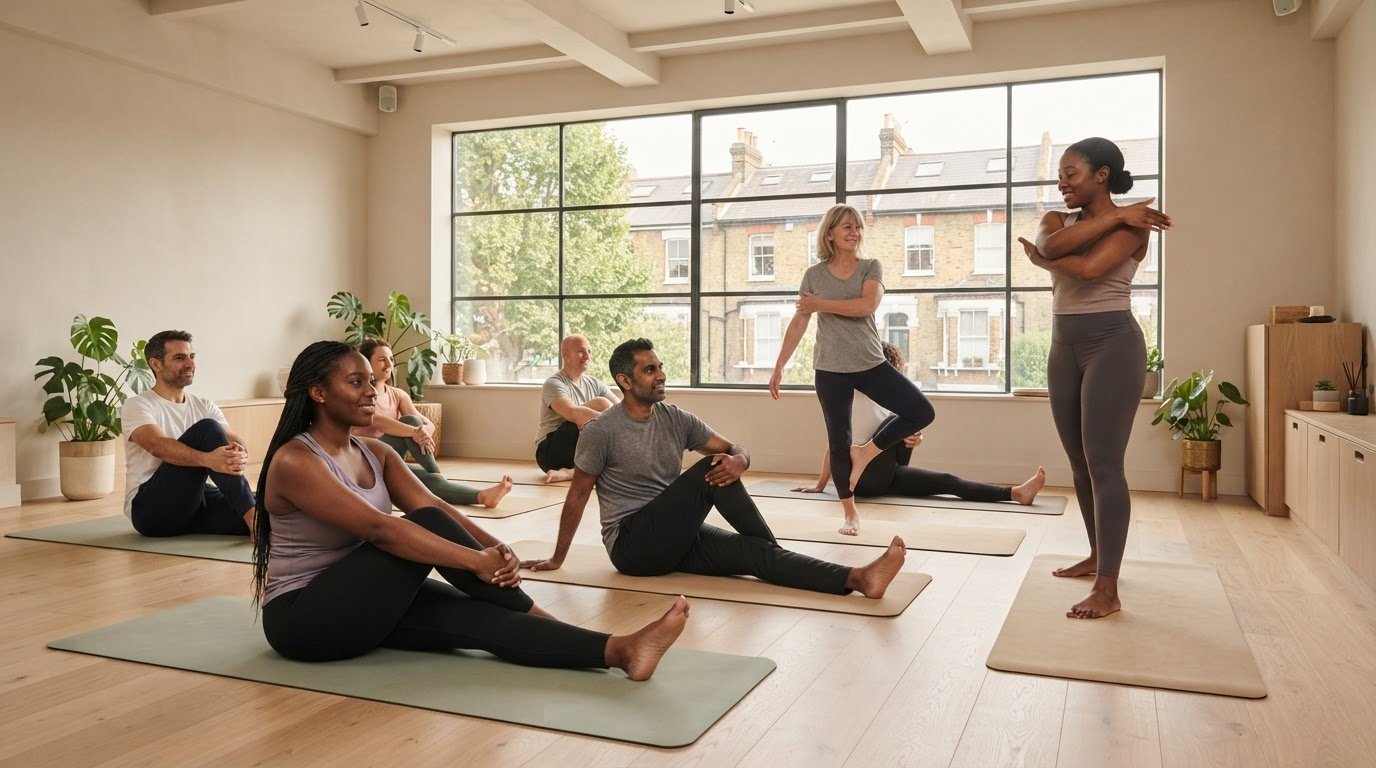
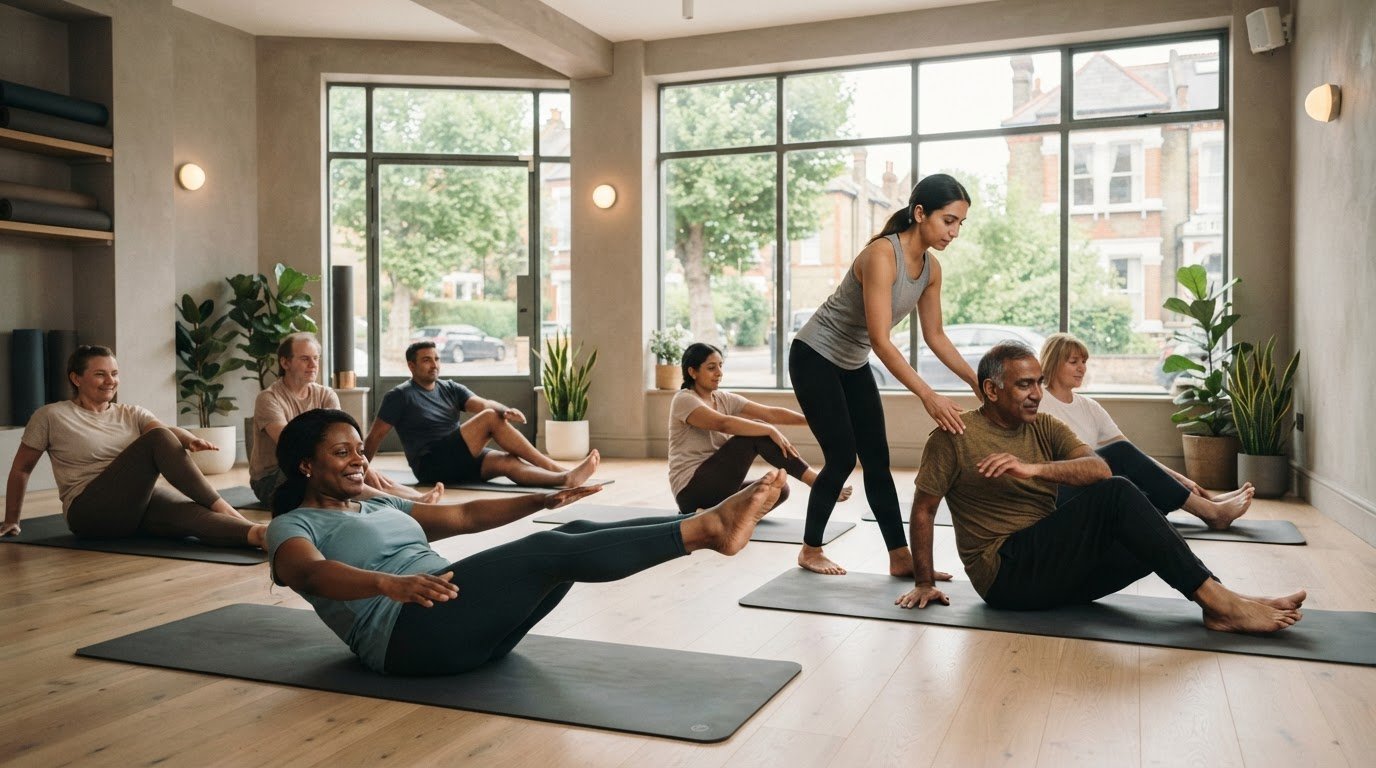
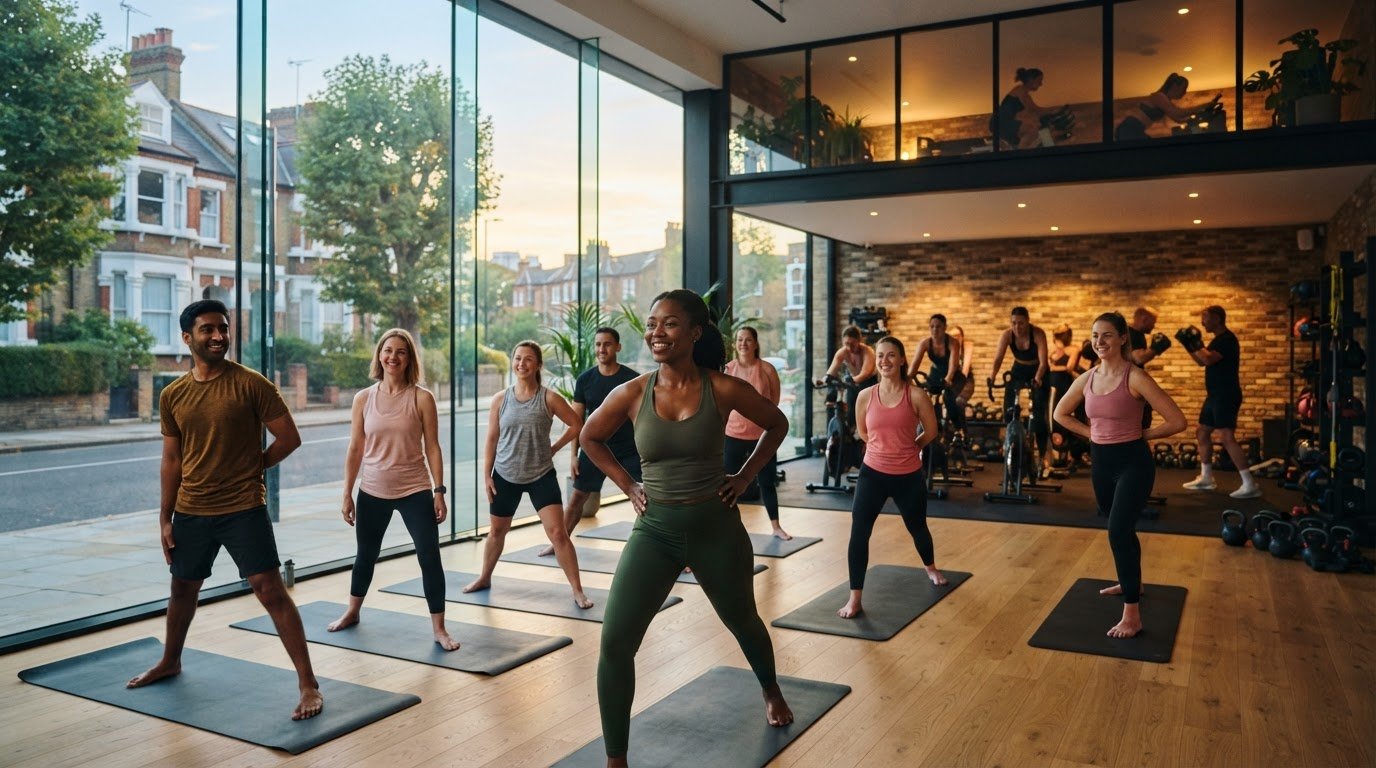
Tracking fitness progress at the gym should support enjoyment and consistency, not become another test to pass. If you miss a session or forget to write something down, pick up where you left off. A welcoming gym environment, access to equipment and the option to join group classes can help make exercise feel like a routine you want to return to. Gym n Go Forest Hill offers gym equipment and group fitness classes in Forest Hill, London SE23.
Build a progress habit that fits everyday life
Link your brief log entry to the end of each workout, such as while you’re packing your things. Keep the same small set of measures during busy weeks rather than trying to capture every detail. If you miss a note, don’t spend time recreating it from memory. Return to your usual approach next time. A useful habit is one you can restart easily.
Your record doesn’t need to be perfect to help you. Some weeks may be busier than others, so scale the process back when needed. A date and a short note may be enough. The aim is to stay connected to your goal and notice what helps you keep going, not to maintain an unbroken run of entries.
Find support for your next step in Forest Hill
Gym n Go Forest Hill is a fitness centre in Forest Hill, London SE23, with gym equipment, group classes and personal training. Build your routine around the kind of activity that suits you, then track the signs that matter to your own goal. A personal trainer can offer tailored guidance if you’d like help shaping or reviewing your approach.
If you’re local and would like to experience the gym for yourself, try Gym n Go Forest Hill with a free one-day guest pass. It’s a practical way to explore the setting and consider how a regular visit might fit into your routine. Bring your simple tracking approach with you and focus on finding a rhythm that feels welcoming and sustainable.
Take your next step with confidence
Your progress record doesn’t need to become a permanent set of rules. As your priorities change, let your approach change with them. The goal is to build a fitness routine you want to return to, with tracking that supports your wellbeing rather than adding pressure. If a measure stops feeling useful, choose one that better reflects what you want from exercise now.
Tracking fitness progress at the gym can be part of a positive routine, not the reason you go. Your next step might be trying an approachable activity, exploring a group class or getting familiar with a gym setting. Gym n Go Forest Hill is a welcoming fitness centre in London SE23, with gym equipment, group fitness classes and personal training for tailored support.
Interested in seeing whether it feels right for you? Try a free one-day guest pass at Gym n Go Forest Hill. Try your free one-day guest pass and take your next step at a pace that feels comfortable. Use your visit to explore the gym and think about a routine you can maintain.
Frequently Asked Questions
How often should you track your workouts at the gym?
Make a brief record after each workout you want to compare, then review entries once you have a useful group of similar sessions. The right interval depends on how often you train: someone attending less frequently may need longer to spot a pattern. If you’re training in Forest Hill, fit the note into the end of your visit so it supports your routine rather than interrupting it.
Do you need a fitness app to track gym progress?
No, an app is optional. A notebook or a simple phone note can hold everything you need, and either may be easier if you prefer not to manage extra features. If you try an app, start with the basic workout-entry function. Keep using it only if it makes your records easier to find and understand, rather than adding steps you don’t need.
Is body weight the best way to measure fitness progress?
No, body weight is only one possible measure, and it may not reflect the goal you’re working towards. If you choose to weigh yourself, compare readings collected under similar conditions rather than reacting to a single result. You could also track something more relevant, such as completing a planned activity with greater ease. Choose measures that feel useful and comfortable for you.
Can you track gym progress without taking progress photos?
Yes, photos aren’t necessary. You can follow changes through workout notes, attendance, how familiar movements feel or whether everyday activities seem easier. If you prefer a visual record, it’s still your choice, not a requirement for making progress. Leave photos out if they make you self-conscious or pull attention away from the reasons you wanted to exercise.
What should you record in a gym workout log?
Record enough to make the session understandable later: the date, activity or exercise, and relevant details such as sets, repetitions or duration. Add a short note if you changed the plan, used a different variation or felt unusually tired. For example, noting an exercise substitution can stop you comparing two sessions as though they were identical. Keep the format consistent and brief.
What should you do if your gym progress stalls?
Don’t assume a slower period means you’ve failed. Check that you’ve recorded comparable sessions, then consider whether your schedule, chosen activity or goal has changed. A demanding week or disrupted routine may affect how training feels. Make one manageable adjustment, such as returning to a comfortable plan or changing how you assess progress, then give yourself time to see whether it helps.
nice text bro