
4 ways to stay consistent with the gym and build a routine

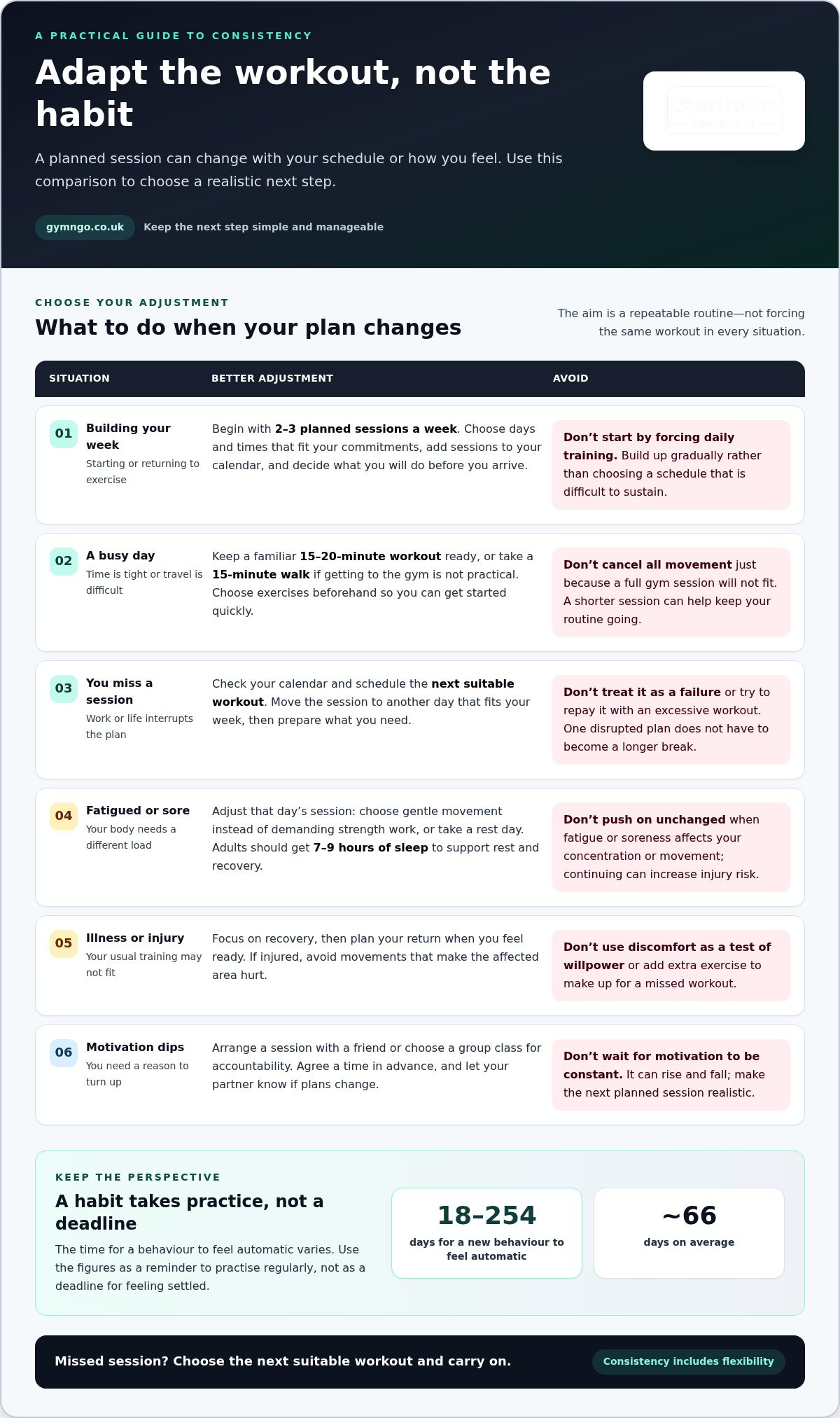
Two to three planned workouts a week is a manageable starting point for most people beginning or returning to exercise. To learn how to stay consistent with the gym, repeat sessions in a regular routine and build up gradually, rather than trying to train every day from the outset. A new behaviour can take 18 to 254 days to feel automatic, so give yourself time to find a rhythm.
It’s normal for motivation to rise and fall, or for a busy week to disrupt your plans. Missing a session doesn’t mean you’ve failed. Choose a realistic next workout and carry on.
Here are four practical ways to make exercise easier to stick with. Learn how to build a routine, stay motivated, make a short workout count and adapt your training when rest, illness or injury changes what your body needs.
Table of Contents
1. How long does it take for exercise to become a habit?
There’s no fixed date when exercise becomes automatic. A new behaviour can take 18 to 254 days to feel like a habit, with an average of around 66 days. So the idea that it always takes 21 days doesn’t fit everyone. Use those figures as a reminder to practise regularly, not as a deadline for feeling motivated or perfectly settled.
Choose a weekly frequency you can repeat around work, family and other commitments. For most people starting or returning to exercise, two to three days per week is a practical starting point. New gym-goers or people restarting may also aim for three to four days a week, then build towards that gradually. If six training days feels difficult to sustain, begin with two or three planned sessions instead.
Make your schedule specific. For example, plan three workouts each week for the next four weeks, on days and at times that fit your routine. A Monday evening session after work may be easier to remember than an unscheduled workout. Repeating exercise in a stable context, such as on the same days or at the same time, can help make it more automatic. Add each session to your calendar and decide what you’ll do before you arrive.
Enjoyment matters because a routine needs to feel worth repeating. Try options such as strength training, a class, cycling or a brisk walk, and notice which activities make you want to come back. If you dislike a workout, change the activity rather than abandoning your schedule. Keep your first plan manageable, review it after four weeks and make one change at a time. A routine that fits your life is easier to maintain than an ambitious plan built around someone else’s timetable.
2. Using apps, trackers and personal trainers for motivation
A simple workout log makes progress easier to see. After each session, record the date, exercises, weights, sets and repetitions. Add a note about how it felt, such as “steady” or “challenging”. Review your entries regularly to spot completed sessions and improvements. Track attendance too, rather than judging progress only by body weight or muscle size.
Use an app, spreadsheet or paper notebook, whichever you’ll keep updating. Dedicated digital tools such as ironpathapp.com can streamline logging your weights and sets as you advance. A tracker works best when it answers a clear question: have you attended, or are you progressing an exercise? If you’re considering how to stay consistent with the gym, set a personal milestone, such as improving your squat by 5 kg over six weeks. Treat it as a guide, not a reason to rush.
Progressive overload means gradually increasing the challenge of an exercise. Use your log to choose a sensible next step. For example, aim for another repetition at the same weight, then increase the weight when that feels manageable. You could add a set instead, but change one part at a time. If your form becomes less controlled, keep the load steady rather than chasing a number.
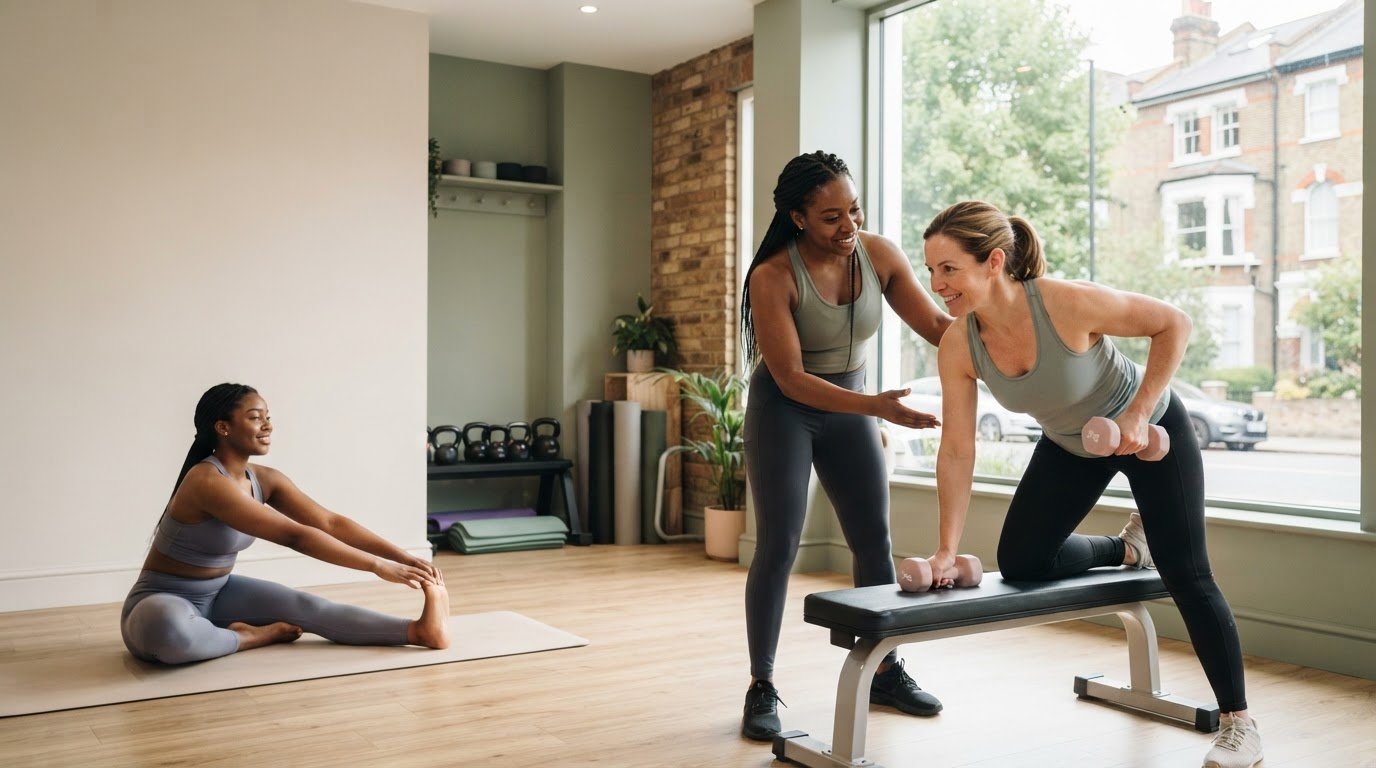
At the end of each week, note your completed sessions, stronger exercises and next goal. For anyone learning how to stay consistent with the gym, a personal trainer can offer workout guidance and motivation when planning feels difficult. Gym n Go Forest Hill’s personal training sessions can help you shape workouts and track milestones with support. Keep your log simple, so it remains useful and easy to maintain.
3. Is a short workout worth doing?
Yes, a short workout is better than dropping movement from a busy day. Keep a 15-to-20-minute go-to routine for tight schedules, or take a 15-minute walk when getting to the gym isn’t practical. Choose a few familiar exercises beforehand, so limited time isn’t spent deciding what to do. A smaller session can help you keep your routine going through work, travel or family commitments.
Choose a gym near home or work if it fits naturally into your usual journey. Exercising at home may suit days when travel is the main barrier. The best option is the one that makes it easiest to start and works with your regular commitments, such as training near work before travelling home.
To make gym visits a habit, attach them to an existing routine. For example, go after work on set days or train after dropping the children at school. Pick a regular time, add sessions to your calendar and prepare your clothes, shoes and essentials the night before. Keep a short plan on your phone or in your gym bag, ready for your next visit.
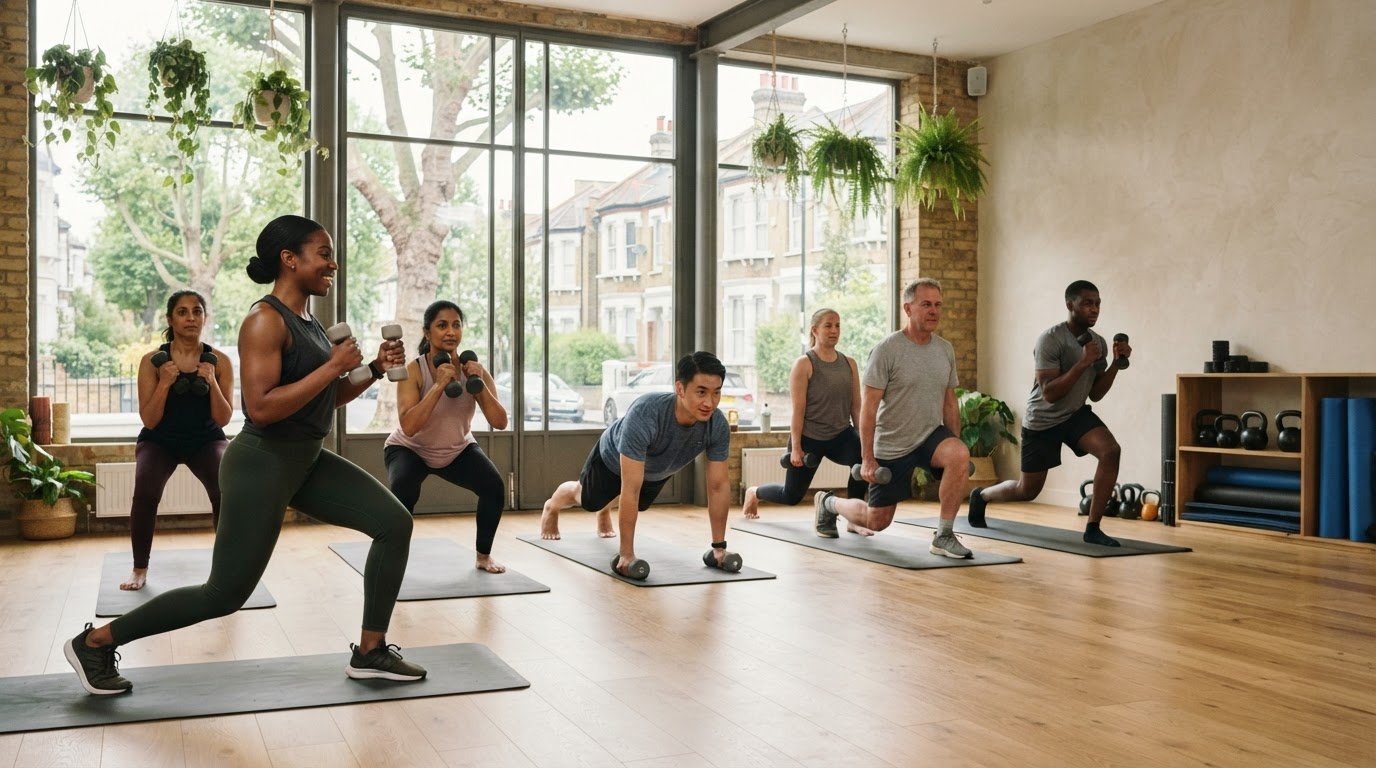
Accountability can help you follow through on a planned session. Arrange a workout with a friend or choose a group class, where the shared activity gives you a clear reason to turn up. Structured disciplines, such as the martial arts classes offered by Renzo Gracie NH, provide a clear example of how community and routine keep people engaged. Agree on a time in advance and let your partner know if plans change. On a busy day, use your prepared shorter workout instead of cancelling all movement.
Life interruptions happen. If you miss a session, schedule the next suitable workout instead of trying to make up for it with an excessive one. After a late shift, for instance, move training to another day that fits your week. Keep the next step simple: check your calendar, choose a time and prepare what you need. One disrupted plan doesn’t have to become a longer break.
4. Balancing training with rest, illness, or injury
Consistency doesn’t mean pushing through every planned session. Adults should get 7-9 hours of sleep to support rest and recovery. If you feel unusually fatigued or sore, adjust that day’s workout and prioritise recovery. For example, replace a demanding strength session with gentle movement, or take a rest day. Continuing unchanged despite fatigue or soreness can increase injury risk.
Consider how you feel before deciding what training makes sense. If your legs are sore after a hard session, choose an easier activity instead of repeating the same demanding exercises. If fatigue affects your concentration or movement, rest rather than attempting your usual workout. Keep your routine flexible enough for recovery, then plan your next session when you feel ready to return.
Illness and injury can interrupt even a well-planned routine. Don’t treat a missed workout as a debt to repay with extra exercise. If you’re injured, avoid movements that make the affected area hurt, and don’t turn discomfort into a test of willpower. If illness or injury changes what you can do, focus on recovery before rebuilding your usual training pattern.
When you return, start with a manageable version of your usual session. For example, reduce the effort or choose movements that feel comfortable, then build back towards your routine gradually. Keep track of how each workout feels, so you can notice whether fatigue or soreness is increasing. If you’re unsure how to adapt your exercises, get personal training support to discuss suitable workout guidance. The key is to treat rest as part of training, not a failure to stay consistent.
Gym n Go Forest Hill: Flexible Gym Memberships
Gym n Go in Forest Hill offers flexible gym memberships to help you make exercise part of your routine. If you’d like support turning a plan into regular sessions, personalised training can provide workout guidance and motivation. Yoga and Pilates classes offer another way to include movement, while group classes add a shared, scheduled activity to your week.
Choose the option that suits the routine you want to maintain. You might combine independent gym sessions with a class, or use personal training to structure your workouts. Gym n Go’s flexible membership options can fit changing routines, making them a natural next step if you’re ready to establish a regular place to exercise in Forest Hill.
Visit gymngo.co.uk to find out more about Gym n Go in Forest Hill.
Make your next step feel like yours
Your routine should support the life you have, not compete with it. Consider what you want exercise to make possible, whether that’s feeling more capable, having time for yourself or enjoying movement with others. That personal reason can guide your choices when your schedule or energy changes.
There’s no single perfect formula for how to stay consistent with the gym. A lasting routine is one you can adjust as your needs change, without treating every shift as a fresh start. Let your priorities shape what progress looks like, and give yourself room to build confidence at your own pace.
If you’d like a welcoming place to take your next step, get in touch with Gym n Go Forest Hill. You can explore whether it feels like the right setting for your fitness routine and decide what works for you. Start with the next step that feels achievable, then keep moving forward.
Frequently Asked Questions
How Many Days a Week Should I Actually Work Out?
For many people starting or returning to exercise, two or three workouts a week is a manageable goal. Try Tuesday and Saturday, for example, so sessions aren’t on consecutive days. If your schedule changes, choose replacement days before the week begins. You can build towards more frequent training as the routine becomes easier to fit around work, family and recovery.
How do I stay consistent in the gym when I am not motivated?
Make the decision easier before motivation dips: write down your next session, pack your kit and set a reminder. When you arrive, start with a familiar first exercise instead of debating the whole workout. If you feel out of place, ask a trainer for help with equipment or movements. A clear first step can help you get started without waiting to feel inspired.
How long does it take for exercise to become a habit?
It can take 18 to 254 days for a new behaviour to feel automatic, with an average of around 66 days. That wide range means there’s no personal deadline you need to meet. Choose a reliable cue, such as changing into your gym clothes after work, and repeat the same sequence. Notice whether starting feels easier over time, rather than judging progress by a particular date.
Is It Better to Do a Short Workout or Just Skip the Day?
A shorter session can be a good choice when time is tight and you feel well enough to exercise. Decide in advance what to keep, such as a warm-up and two familiar movements, so you can start promptly. If illness, pain or unusual fatigue is why you’re considering skipping, prioritise rest instead. The right choice depends on what has changed your plan.
Is a short workout worth doing?
Yes, if it gives you a manageable way to move and suits your energy that day. Choose a clear focus, such as practising a few familiar lifts or taking a brisk walk, instead of squeezing your full programme into limited time. Keep the effort comfortable and leave enough time to get ready for your next commitment. A short session doesn’t need to match a full workout.
What Do I Do When My Motivation Completely Vanishes?
Pause and identify what’s changed: are you tired, bored, overwhelmed or unsure what to do? Choose a response that fits, such as taking a recovery day, trying a different activity or asking someone to join you. If your goal no longer feels meaningful, adjust it to something you can measure, like completing your next planned session. Restart with a clear, realistic action, not self-criticism.
Comments