
Dynamic Yoga Flow SE23 and the Role of Breath

Dynamic yoga flow isn’t about rushing from pose to pose. In SE23, it brings movement and breath together in a flowing practice, with poses adapted to support your strength, flexibility and mobility.
It’s understandable if “dynamic” brings to mind a fast, demanding workout. The pace can vary, and poses can be adapted to your experience and how your body feels. The focus is on moving with attention, not forcing yourself into a shape.
This guide explains what dynamic flow yoga involves and why breath plays such an important part. You’ll also discover how movement and adaptable poses can help you build a more balanced practice, and what to expect from a class in SE23.
Table of Contents
Adaptations and accessibility for different levels
Dynamic yoga flow can be adapted by changing a pose, its range of movement or the pace between shapes. For example, hold a chair during a standing balance instead of reaching towards the floor. This keeps the movement familiar while reducing how far you need to lean. In a flowing class, everyone can move in their own way.
If you’re new to yoga, start with a smaller version of each movement. In a lunge, lower your back knee to the mat or shorten your stance. In a forward fold, bend your knees and rest your hands on your thighs. These adjustments make each shape more manageable without requiring you to match someone else’s range.
Props and position changes offer practical options during a sequence:
Blocks: Place them beneath your hands in a standing fold to bring the floor closer.
A chair: Use its seat or back for support during a balance or standing pose.
Knees down: Lower them for a plank variation or a transition closer to the mat.
Less range: Make a twist smaller or keep a bend in your knees.
With experience, you might choose a deeper lunge or hold a balance for longer. Progress doesn’t mean every pose must become more intense. You can also develop your flow by smoothing out transitions or keeping a steady rhythm through familiar poses.
Your energy and comfort can vary from one class to another. If a transition feels rushed, pause in a stable position, such as standing with both feet grounded, before continuing. If kneeling doesn’t suit you, choose a standing variation instead. In a dynamic yoga flow SE23 class, adaptable options help you make thoughtful choices rather than force a pose. Pay attention to how each adjustment changes your balance and movement, then choose the version that feels controlled.
Breath-focused movement
In a flowing practice, breath gives each transition a steady rhythm. You might inhale as you lift your arms overhead, then exhale as you fold towards your legs. Linking these actions helps you move with intention instead of rushing to match someone else. Use your breath as a guide, not a timer, and keep each movement comfortable and controlled.
Notice how your breath changes between a held pose and a transition. In a lunge, for example, inhale as you lengthen your spine, then exhale as you settle your hips. As you move towards Downward-Facing Dog, let your exhale accompany the transition. These are examples, not fixed rules for every class. Follow the teacher’s cues and keep breathing naturally.
Inhale: Try breathing in as your chest lifts in a standing reach.
Exhale: Breathe out as you fold forwards or lower towards the mat.
Pause: Take a comfortable breath in a stable pose before moving again.
Adjust: Slow the transition if your breathing becomes strained or uneven.
Breath awareness can help you notice when a sequence is moving too quickly. If you can’t coordinate a transition comfortably, stay in your current pose for another breath. Then rejoin at the next shape, such as standing before the following lunge. This lets you make a clear choice without holding your breath or forcing a movement.
During dynamic yoga flow in SE23, pay attention to the quality of each breath rather than trying to make it deeper. A quiet, even breath can help you notice tension in your shoulders or jaw. Soften those areas, reduce your range, or pause in a steady position. When your breathing feels settled again, continue with the next movement at a pace you can manage.
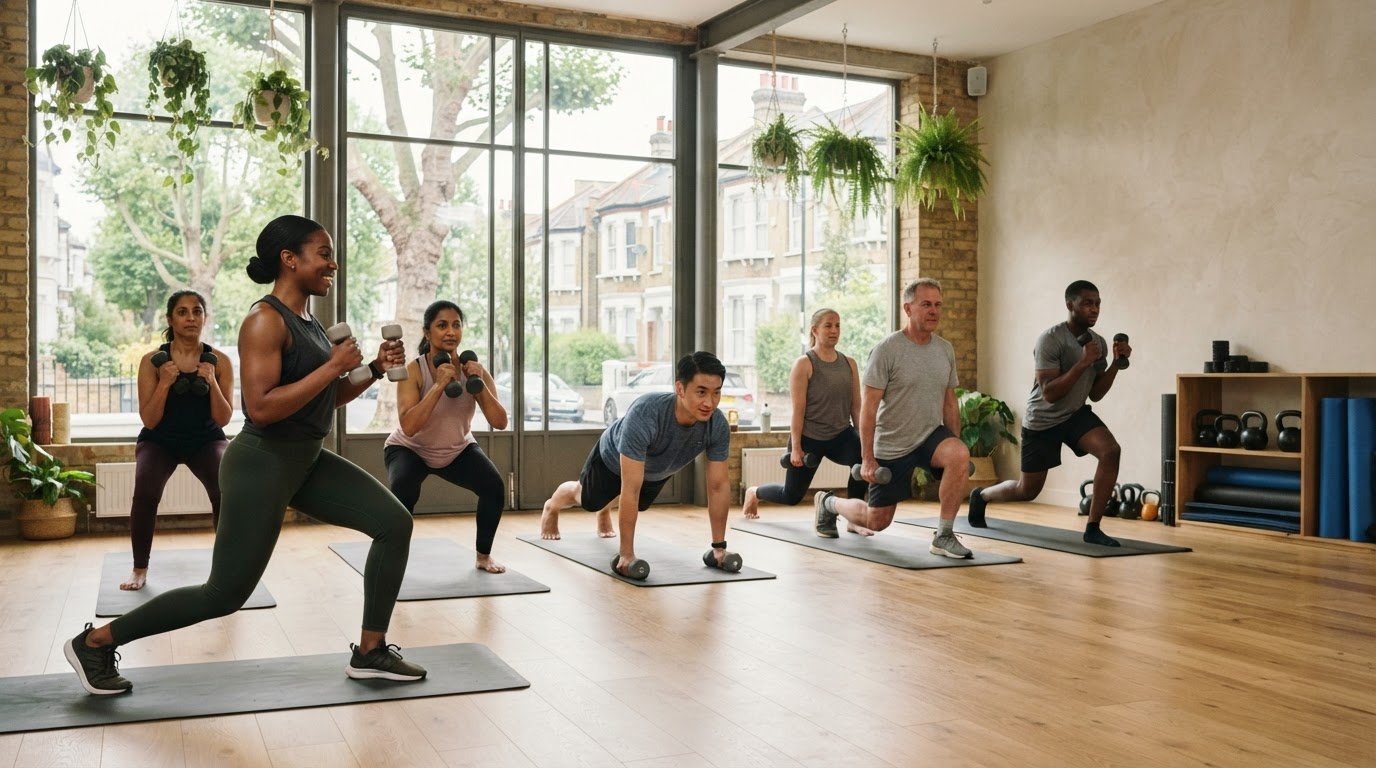
What really is Dynamic Flow Yoga?
Dynamic flow yoga links poses into a continuous sequence rather than holding each shape for a long pause. A class might move from a standing reach to a forward fold, then into a lunge and a floor-based pose. Transitions matter as much as the poses themselves, creating a moving practice rather than a series of separate positions.
In SE23, yoga classes are held at Gym n Go Forest Hill in Forest Hill. Wear comfortable clothing that lets you bend and reach easily. A yoga mat and water bottle are practical items to bring; choose a mat you can carry and use comfortably.
Vinyasa is a style of yoga built around linking movement and breath. Dynamic flow can use this approach, but the phrase describes a broad type of moving practice, not one fixed sequence. One class might connect standing poses, while another spends more time moving between floor-based shapes. The teacher’s choices, pace and cues shape the experience.
For example, a sequence could start in Mountain Pose, move into a raised-arm stretch, then fold forwards. From there, you might step back to a lunge, return to standing and repeat on the other side. The order can vary. Rather than learning a fixed routine, follow the class as each pose leads into the next.
Flow: Poses connect through transitions, such as stepping from a fold into a lunge.
Vinyasa: Movement and breathing are coordinated, with the teacher guiding the pace.
Variation: Sequences can include standing, balancing and seated shapes.
This variety sets the class apart from a practice focused mainly on staying in one pose. You move between shapes while still paying attention to alignment and control. If you lose track of the sequence, return to a stable position, such as standing with both feet grounded, and follow the next cue. The aim is to join the flow, not memorise every transition.
Strength, flexibility and mobility
Dynamic yoga can challenge your muscles and take your joints through varied movements. The experience depends on the poses and pace. Pushing beyond comfortable control can make a movement feel strained.
Strength and mobility
Strength is your ability to support your body in a pose, while mobility is how comfortably you move through a joint’s range. In Chair Pose, your legs and trunk work to keep you steady. Moving from standing into a side angle also asks your hips and shoulders to change position with control. Practising these movements can make everyday actions, such as reaching or rising from a chair, feel more familiar.
Flexibility in dynamic yoga
Flexibility describes how far your muscles and connective tissues allow a stretch, while dynamic yoga explores that range through changing poses. For example, a standing side reach lengthens one side of your body; returning upright releases the stretch. Move only as far as you can control. A smaller range still lets you explore the shape without forcing a deeper position.
The main risks arise when you rush, lose balance or force a pose. In a standing balance, reaching too far before your feet feel steady can make you wobble. Keep movements controlled, reduce the range if a position feels uncomfortable, and pause if you can’t maintain your balance. A slower transition can help you notice how your body responds before continuing.
To make the practice useful, notice the difference between effort and strain. Your muscles may work in a held Chair Pose, but sharp discomfort is a reason to ease out of the shape. In a side angle, place your hand higher on your thigh instead of reaching towards the floor. These adjustments help you adapt the pose while keeping your movement stable.
Explore a flexible way to support your movement routine as you build consistency.
Gym n Go Forest Hill: Flexible Gym Memberships
Gym n Go Forest Hill offers flexible gym memberships for building a routine that works around your life. If you want to keep exploring flowing movement, its Yoga & Pilates Classes provide a way to include guided practice in your fitness routine. Personal Training is another option when you want individual support with your exercise goals.
Choose the approach that suits your needs now. You might focus on yoga classes, combine different activities or use a flexible membership to support your wider training. These options can help you make movement part of your week without making every session the same.
Contact Gym n Go Forest Hill to discuss your options and take a comfortable next step.
Make your next movement session your own
Let curiosity guide your next step. If you’re exploring dynamic yoga flow in SE23, think about what would make a class feel worthwhile for you: a calmer pace, more time to learn transitions, or a chance to build a regular movement routine. Having one personal aim can help you choose a practice that feels relevant, without turning every session into a test of progress.
After a class, take a moment to notice which parts suited you. Perhaps you enjoyed the steady rhythm or preferred extra time between poses. Reflecting on this can help you decide what to try next, whether you return to a similar flow or explore another form of movement.
Gym n Go Forest Hill can be a place to continue exploring your fitness routine. Discover your next step at Gym n Go Forest Hill, and choose a pace that feels right for you. Every practice can begin with one comfortable movement.
Frequently Asked Questions
What is Dynamic Yoga Flow in SE23?
Dynamic Yoga Flow is a moving yoga practice where poses form a connected sequence. In SE23, a class might link standing, balancing and seated poses, with transitions shaping the session’s pace. The sequence can vary between classes, so the experience depends on the poses chosen and how they’re taught. Think of it as a guided movement practice, rather than a routine you need to memorise.
What should beginners expect in a Dynamic Yoga Flow class?
Beginners can expect spoken guidance through a sequence, with time to learn how one pose connects to another. You might hear cues about where to place your feet or how to turn towards the front of the mat. It’s normal to lose the order at first. Focus on one cue at a time, and return to a steady standing position if you need to reset.
Are there beginner-friendly or modified options for Dynamic Yoga Flow?
Yes, you can make a sequence more manageable by choosing a simpler version of a pose or transition. For example, stay in a standing variation instead of moving down to the mat, then rejoin the next shape when ready. You can also pause rather than repeat a movement. These options help you follow the class without treating every variation as a progression you must achieve.
How does Dynamic Yoga Flow compare with other yoga classes in SE23?
Dynamic flow places more emphasis on moving between poses than a class centred on longer holds or quiet relaxation. Vinyasa is closely related, as both can link poses into a sequence; the exact pace and style depend on the teacher. When choosing between class descriptions, consider whether you want continuous transitions, time to settle into individual poses or a calmer focus.
Comments