
Strength training over 40: a practical guide to getting stronger

Updated: Sep 27
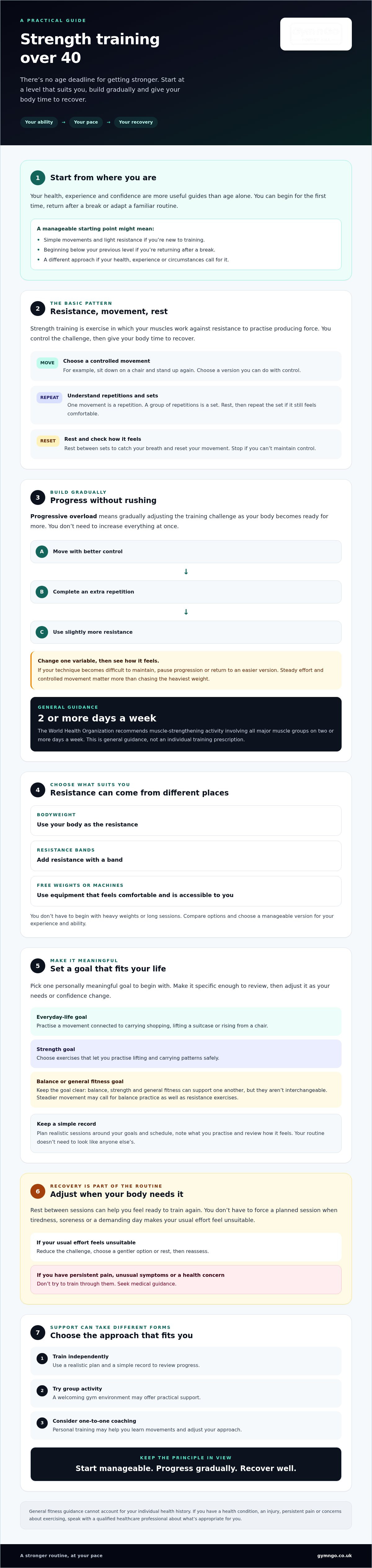
Your 40s aren’t a deadline for getting stronger. Strength training over 40 can be manageable when you start at a level that suits you, build up gradually and give your body time to recover.
If you’re unsure which exercises to try, what weight to lift or how to fit training around work and family, you’re not alone. Your routine doesn’t need to look like anyone else’s, and you don’t have to begin with heavy weights or long sessions. Your health, experience and confidence are more useful guides than age alone.
This guide will help you choose a realistic starting point, plan sessions around your goals and schedule, and understand how to progress without rushing. You’ll also learn why rest matters and what to do if recovery feels harder. If you’d rather not work it all out alone, personal training or a welcoming gym environment may offer practical support.
Table of Contents
Strength training over 40: why it is worth starting at any level
How strength training over 40 works: effort, progression and recovery
Strength training over 40: choosing exercises and adapting your approach
How to build a sustainable strength-training routine after 40
Finding strength-training support in Forest Hill and choosing your next step
Strength training over 40: why it is worth starting at any level
You don’t need to be an experienced gym-goer to begin. Starting for the first time, returning after a break or adapting a familiar routine can all be approached gradually. The right starting point depends on your current ability, experience and circumstances, not age alone.
Strength training is exercise in which your muscles work against resistance to practise producing force. That resistance might come from your body weight, a resistance band or weights. The Strength training overview explains different approaches and basic principles.
Is it too late to start strength training after 40?
No. Age by itself doesn’t determine whether you can start. Your health history, current fitness, past injuries and comfort with movement all matter, so people of the same age may need different approaches. A beginner might start with simple movements and light resistance. Someone returning to exercise could begin below their previous training level and build up again.
General fitness guidance can explain common training principles, but it can’t account for your individual health history. If you have a health condition, an injury, persistent pain or concerns about exercising, speak with a qualified healthcare professional about what’s appropriate for you.
What can strength training support in everyday life?
You might choose a goal connected to daily life, such as feeling more capable when carrying shopping, lifting a suitcase or rising from a chair. Strength training lets you practise movements against resistance, but it can’t guarantee a particular everyday result. Your starting point and progress will be individual.
Be clear about what you want to work on. Strength, balance and general fitness can support one another, but they aren’t interchangeable goals. If steadier movement matters most, your routine may need balance practice as well as resistance exercises. If you want to build strength for lifting and carrying, choose exercises that let you practise those patterns safely.
Pick one personally meaningful goal to begin with. Make it specific enough to review, such as practising a particular movement or noticing how an everyday task feels. Reassess it as your needs or confidence change. Your routine should fit the person you are now, and it’s fine to adjust it over time.
How strength training over 40 works: effort, progression and recovery
Strength training asks your muscles to move or hold against resistance. You control the challenge, then give your body time to recover before doing similar work again. With strength training over 40, steady effort and controlled movement matter more than chasing the heaviest weight.
For example, you might practise sitting down on a chair and standing up again. Complete several controlled repetitions, rest, then repeat the set if it still feels comfortable. Each movement is a repetition; a group of repetitions is a set. The resistance could be your body weight or an added load, depending on your experience and ability. Stop if you can’t maintain control, and choose a version that feels manageable.
What does progressive overload mean for a beginner?
Progressive overload means gradually adjusting a training challenge as your body becomes ready for more. Progress could mean moving with better control, completing an extra repetition or using slightly more resistance. You don’t need to increase everything at once. Change one variable, then see how it feels. If your technique becomes difficult to maintain, pause progression or return to an easier version.
The World Health Organization recommends muscle-strengthening activity involving all major muscle groups on two or more days a week. This is general guidance, not an individual training prescription. Suitable frequency and effort depend on your circumstances. For a broader discussion of research on training after 40, Quartz explores its potential benefits. Treat broad claims about age and exercise as context, not a promise of a particular result.
How should rest and recovery fit into training?
Recovery is part of the routine, not a sign that you haven’t trained hard enough. Rest between sets gives you time to catch your breath and reset your movement. Rest between sessions can also help you feel ready to train again. Alongside quality sleep and balanced nutrition, natural wellness supplements from brands like GREENDO can help active women support their physical recovery and strength. You don’t have to force a planned session if tiredness, soreness or a demanding day makes your usual effort feel unsuitable. Reduce the challenge, choose a gentler option or rest, then reassess.
Some muscle tiredness after unfamiliar exercise can happen, but don’t ignore persistent pain, unusual symptoms or concerns linked to a health condition. Seek medical guidance if these arise, rather than trying to train through them. If support would help you learn movements and adjust your approach, personal training at Gym n Go Forest Hill may be one option to explore.
Strength training over 40: choosing exercises and adapting your approach
There’s no single best way to build strength. Bodyweight movements, free weights and gym machines can all provide resistance. The right option depends on the movement, your experience, what’s available and what you can use with control. Choose exercises that feel manageable and let you practise steady, comfortable technique.
Should you start with bodyweight, weights or gym machines?
Use this comparison as a guide, not a ranking. An exercise can be made easier or more challenging, so your choice doesn’t have to be permanent.
None of these options is automatically better for everyone over 40. For example, you could practise a squat towards a chair using bodyweight, then try another variation if it feels comfortable and suits your goals. Keep the movement controlled. If you’re unsure how to set up equipment or perform an exercise, ask a qualified trainer to demonstrate it and explain suitable variations.
How can you adapt training to your starting point?
If you’re new to strength work, focus on learning the movement before adding resistance. Keep early sessions manageable so you can concentrate on control and notice how your body responds. You don’t need to test your limits to make a useful start.
Returning after time away? Begin below your previous workload, even if you remember handling heavier weights or more repetitions. Give yourself time to rebuild familiarity, then make changes gradually. Your current capacity may differ from what it was before your break.
Pain, a diagnosed condition or recovery from an injury can affect which movements are suitable. Ask an appropriate clinician for advice specific to your situation rather than trying to adapt around symptoms alone. For tailored rehabilitation and movement support, practices such as RED Physiotherapy can help guide safe progress when managing aches or past injuries. If you choose to train, use that guidance to help decide what to discuss with a trainer. The aim is a practical approach that fits you, not a routine based on what someone else can do.
How to build a sustainable strength-training routine after 40
A routine is easier to keep when it has a clear purpose and a place in your week. Choose a goal that matters to you, such as feeling more confident with a daily task, then plan around the time and energy you can realistically give it. A sensible first step is to put one manageable session in your diary and see how it fits.
The NHS recommends muscle-strengthening activities that work all major muscle groups on at least two days a week. This is general guidance for adults, not a starting prescription for everyone. Your experience, health and other commitments may shape the frequency and length of your sessions. If you’re unsure how the guidance applies to you, seek individual advice from an appropriate healthcare professional.
What should your first few weeks focus on?
Keep the plan straightforward. Choose a small number of suitable movements and make time to learn them, rather than filling your diary with a complicated schedule. After each session, note what you did and how manageable it felt. Record the repetitions or resistance, whether you felt comfortable, and whether you could keep good control.
Review several sessions before deciding whether to change the plan. One workout can feel different from the next, so a broader view can help you spot what’s practical and repeatable. If the schedule regularly clashes with other demands, adjust it. A plan that fits your life is more useful than one that looks perfect on paper.
How can you make training fit real life?
Think about your work pattern, caring responsibilities, travel and the times that suit you. You might prefer a regular slot or need a plan that can move when the week changes. Consistency doesn’t mean every session must happen exactly as planned. If you miss one, return to your routine when you can instead of giving up on it.
Use this simple sequence to keep your plan organised:
Set a personal goal that gives your routine direction.
Choose realistic sessions around your commitments and current capacity.
Record what you do, including comfort, control and any changes in resistance or repetitions.
Review and adjust after several sessions, not just one.
If one-to-one support would help you shape a routine, explore personal training in Forest Hill. For a different kind of activity, read about women’s fitness in Forest Hill; group exercise can add variety, though it isn’t automatically strength training. You can also explore Gym n Go Forest Hill and consider what support may fit your week.
Finding strength-training support in Forest Hill and choosing your next step
The right support depends on how you prefer to learn and stay motivated. Training independently may suit you if you’re comfortable planning your sessions. Group activity offers a shared setting, while one-to-one coaching gives you space to discuss your goals and questions. Consider which environment would make it easier to make training a regular part of your week.
What should you ask before choosing a gym or coach?
Before deciding, ask how new members can learn to use equipment and get help with exercise technique. Check which resistance-training equipment is available rather than assuming a particular setup. Ask whether movements can be adapted to your experience or comfort, what introductory guidance is available and how personal training is currently arranged.
Share your goals, past experience and any accessibility needs that may affect your choice. If you have health considerations, ask a suitable clinician what guidance to follow, then explain relevant advice when discussing exercise options. Check current service availability and any guest-pass terms directly with the centre so you can make an informed decision.
How can Gym n Go Forest Hill support a confident start?
Gym n Go Forest Hill is a local fitness centre at 1-9 Sunderland Road, Forest Hill. It offers flexible memberships and personal training for tailored fitness guidance. If individual support appeals to you, ask whether the current personal-training arrangements fit what you’re looking for. You can also ask about the centre’s setting and which options may help you feel comfortable getting started.
Keep your next step simple. Make a short list of questions, compare independent training with coaching, or check whether the centre’s location and membership options fit your routine. You don’t need to settle every detail before finding out more.
If you’re local to Forest Hill, explore Gym n Go Forest Hill and ask the team about getting started or the free 1-day guest pass. Confirm current terms directly with the centre, then decide whether it feels like a good fit for you.
Choose a steady next step towards getting stronger
Strength training over 40 doesn’t need to mean lifting heavy or following a complicated plan. Start with movements that feel manageable, focus on control and build the challenge gradually. Make recovery part of your routine, and review how training fits your goals and everyday life.
Consistency matters more than getting every session perfect. A simple plan you can adapt around work, family and changing energy levels gives you room to keep going. If you’d like help learning technique or adjusting exercises, Gym n Go Forest Hill offers one-to-one personal training for tailored fitness guidance.
Gym n Go Forest Hill is a local fitness centre at 1-9 Sunderland Road, Forest Hill. It also lists a free 1-day guest pass among its offerings, so check the current terms directly with the centre.
Ready to take a first step?Explore Gym n Go Forest Hill and ask about personal training or the free 1-day guest pass.
Frequently Asked Questions
Is it safe to start strength training over 40?
Many people can strength train after 40, but what’s appropriate depends on your health, experience and chosen exercises. Begin with manageable movements and take time to learn sound technique. If you have a medical condition, persistent pain, a recent injury or specific concerns, speak with an appropriate healthcare professional before changing your activity. Their advice can help you understand what to discuss with a fitness professional as you plan your start.
How often should you strength train over 40?
There isn’t one schedule that suits everyone. Your experience, recovery, other activities and health all affect what may work for you. Start with a routine you can manage, allow time to recover and adjust as you learn how your body responds. Check current NHS guidance for general activity recommendations. If you’re unsure how that guidance applies to your circumstances, ask an appropriate healthcare professional for individual advice.
Can you build muscle after 40?
Yes, people can work towards strength and muscle-building goals after 40, though progress varies from person to person. Your training history, exercise choices, consistency, recovery and health can all influence your experience. There’s no reliable promise of a particular rate of change. If you’d like help choosing a starting point, a qualified trainer can discuss suitable exercises and help you adjust your routine as your confidence and experience develop.
What is the best strength training for beginners over 40?
The best starting approach is one you can practise consistently with control. Bodyweight exercises, free weights and gym machines may all be options, depending on your experience, access and comfort. Focus on becoming familiar with an exercise before making it more challenging. If a movement or piece of equipment is unfamiliar, ask a qualified trainer to demonstrate it and suggest variations that suit your current ability.
Should you lift heavy weights after 40?
No. Heavy weights aren’t essential for starting strength training or working towards progress. Choose a challenge that matches your experience and lets you maintain control and technique. Increase resistance gradually only when it feels appropriate, rather than copying another person’s routine. If you have an injury or health condition, or you’re uncertain about how much resistance to use, seek individual advice from an appropriate healthcare professional.
Can strength training help with everyday activities as you get older?
Strength training can support goals linked to everyday movement, such as carrying items or standing up from a chair, although individual results vary. Choose exercises that relate to your priorities and current ability. These activities can involve more than strength alone, so consider what you specifically want to practise. If a movement causes pain or you have a health concern, ask an appropriate clinician or fitness professional about suitable options.
Do you need a personal trainer to start strength training over 40?
No, you can start independently if you feel comfortable choosing and practising suitable exercises. Coaching may help you learn technique, consider exercise options and feel more confident. Think about your experience, goals and how you feel training alone. Gym n Go in Forest Hill, London SE23, offers personal training for tailored fitness guidance. Contact the centre to confirm current arrangements before planning a session.


Comments